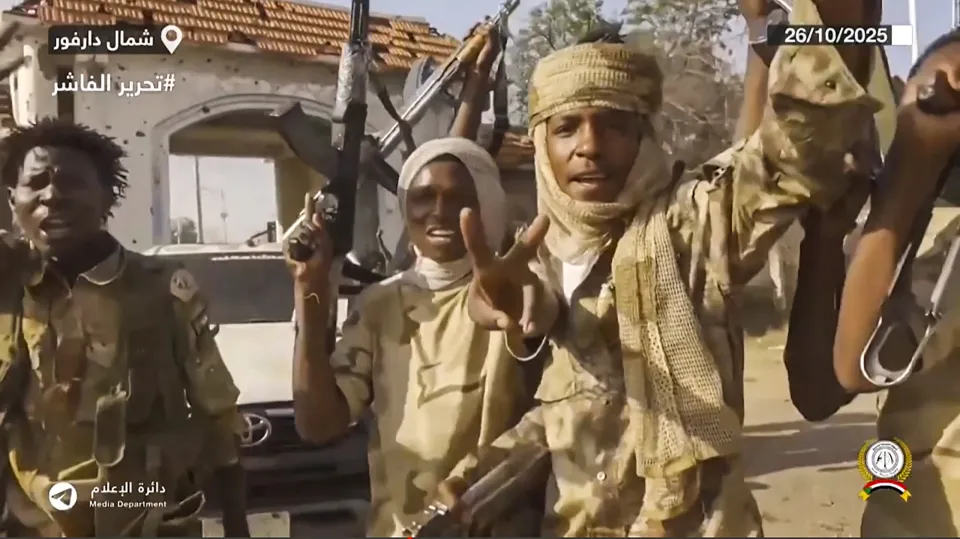
On 28 October 2025, Qatar’s Ministry of Foreign Affairs issued a strongly-worded statement condemning the “horrific violations” committed by the RSF in the city of El Fasher, the capital of North Darfur State in the sisterly Republic of Sudan.
In its communiqué, the ministry expressed deep concern over the escalating humanitarian crisis in El Fasher. It emphasised the urgent need for the RSF to fulfil its responsibilities: protecting civilians, ensuring secure humanitarian access, and adhering to international humanitarian law — particularly the standards set out in the “Jeddah Declaration”.
Additionally, Qatar reaffirmed its principled position: it supports Sudan’s unity, sovereignty, territorial integrity, and independence. The statement rejected any form of external interference in Sudan’s internal affairs and underlined Doha’s backing for the aspirations of the Sudanese people for peace, development and prosperity.
Background: The Situation in El Fasher and Darfur
El Fasher — once a major regional hub in Darfur — has been under intense pressure since the conflict between the Sudanese Armed Forces (SAF) and the RSF erupted in April 2023. The RSF has taken control of large parts of Darfur, laying siege to El Fasher and repeatedly launching attacks on the city and nearby camps of displaced persons.
The humanitarian situation is dire. The city faces acute shortages of food, medicine and safe shelter, while camps such as Abu Shouk and Zamzam — holding hundreds of thousands of internally displaced persons (IDPs) — have been repeatedly targeted.
International bodies have warned that the city may face famine, mass displacement and continued violence that could amount to war crimes or crimes against humanity.
Hence, Qatar’s statement comes at a critical moment, as the international community increasingly calls for accountability and humanitarian access in Darfur.
What Qatar’s Statement Actually Says
Qatar’s Ministry of Foreign Affairs offered several key positions:
- Condemnation of the atrocities: The ministry denounced the “horrific violations committed during attacks by the RSF”.
- Call for protection of civilians and humanitarian aid: The statement urged the RSF to respect its obligations, ensure safe delivery of humanitarian relief, and abide by the rules of war.
- Resolution through peace and dialogue: Rather than military escalation, Qatar called for resolution of the conflict through dialogue and peaceful means.
- Support for Sudan’s sovereignty: Qatar reaffirmed its respect for Sudan’s unity, independence and territorial integrity, and rejected external interference.
Together, these elements reflect Doha’s diplomatic positioning: condemning blatant abuses, supporting humanitarian relief, and advocating for a political resolution anchored in respect for state sovereignty.
Why This Matters
Humanitarian and Legal Implications
Qatar’s condemnation adds to mounting international pressure on the RSF and other parties to the conflict. The targeting of civilians, health facilities and aid convoys constitutes serious breaches of international humanitarian law. Qatar emphasised these responsibilities in its statement.
Moreover, with the UN and other institutions already describing the Darfur crisis as one of the worst humanitarian disasters in the world, every expression of concern matters in building momentum for accountability and relief.
Diplomatic Significance
Qatar plays an increasingly active role in regional diplomacy and mediation. By issuing this public statement, it positions itself as a concerned actor in Sudan’s crisis — one that emphasises legal standards, humanitarian access and peace.
Additionally, by emphasising Sudan’s sovereignty and rejecting external interference, Qatar seeks to balance its condemnation of atrocities with respect for Sudanese self-determination. This is important in a region where external powers often carry complex influence.
Message to the RSF and Other Parties
The statement implicitly places responsibility on the RSF for ensuring civilian protection and allowing humanitarian aid. By calling out these obligations by name, Qatar signals that impunity is not acceptable and that the international community is watching.
At the same time, the emphasis on dialogue rather than purely military solutions implies that Doha wants a negotiated settlement rather than further escalation.
Reactions and Context
Regional and Global Responses
The UN issued its own condemnation of repeated civilian targeting in El Fasher, including an appeal for safe humanitarian access and investigations into attacks on hospitals and shelters.
Other governments and regional organisations have also voiced concern. For example, the Arab League strongly condemned RSF attacks in Darfur earlier in April 2025, stating that such acts violated international law.
Local Impact in Sudan
For the people of El Fasher and Darfur, the international attention and state-level statements provide some moral support, yet on the ground the crisis remains acute. Reports show that civilians are being shelled, aid is blocked, camps are attacked, and starvation looms.
Qatar’s statement may contribute to increased humanitarian relief efforts or diplomatic pressure, yet it also reflects the challenge of turning condemnation into concrete action for people trapped in conflict.
What’s Next?
Increased Humanitarian Efforts
With Qatar’s call for safe aid delivery, there may be renewed push for corridor access into El Fasher and surrounding camps. Humanitarian agencies could use the diplomatic leverage to demand entry.
Diplomatic Engagement
Qatar may use its networks to urge negotiations between the Sudanese government, RSF, and other parties. The call for dialogue suggests that Doha may offer or support mediation efforts.
Monitoring Accountability
With the RSF under scrutiny for alleged war crimes, Qatar’s statement contributes to the broader accountability environment. Future investigations, sanctions or prosecutions may reference such positions.
Sustained Attention
One of the biggest risks is crisis fatigue: without ongoing international focus, the situation may worsen. Qatar’s statement may help sustain attention, particularly within the Gulf region, and encourage regional cooperation on aid and stability.
Final Thoughts
Qatar’s condemnation of RSF-committed atrocities in El Fasher is both timely and significant. It underscores not only the acute humanitarian and legal dimensions of Sudan’s Darfur crisis, but also reflects Qatar’s diplomatic posture: one of active concern, respect for sovereignty, and support for peaceful resolution.
For the Sudanese people — especially those in El Fasher and the Darfur region — such statements matter. They bring attention, reinforce global norms, and help press for relief and protection. Yet, words alone cannot halt bombs, ease starvation or reopen access. The real test lies in whether diplomacy, aid, law and protection converge to relieve the suffering on the ground.
Ultimately, Qatar is signalling that it stands with Sudan’s people in pursuit of peace, dignity and stability — even as the conflict threatens to spiral further. The world will watch whether this diplomatic signal translates into concrete impact.