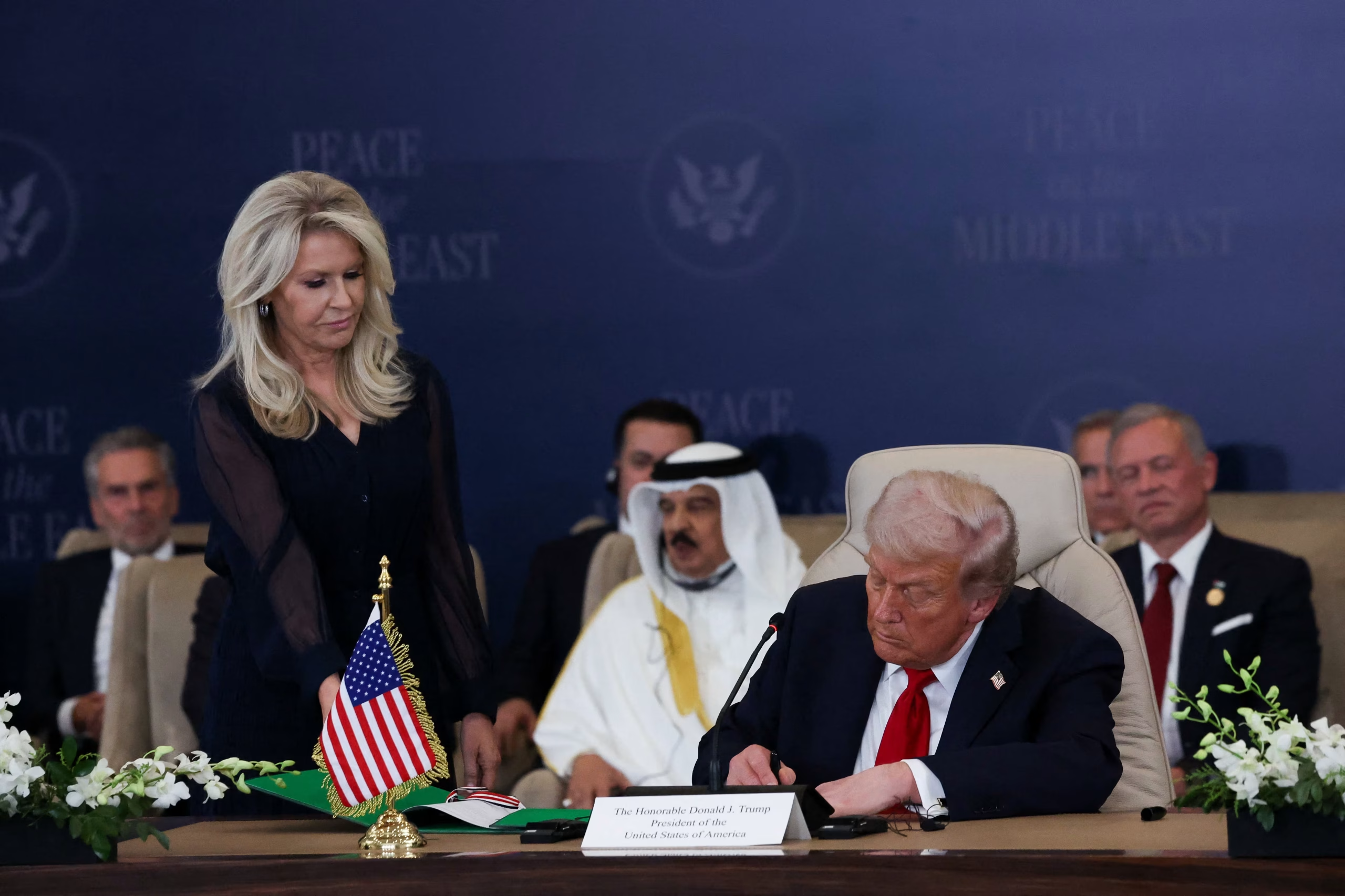
At the Sharm el-Sheikh summit in Egypt on October 13, the leaders of Egypt, Qatar, Türkiye, and the United States released a joint declaration endorsing the Gaza ceasefire deal. The document, titled “The Trump Declaration for Enduring Peace and Prosperity,” aims to move the long-running Gaza conflict toward a lasting truce.
They pledged to implement the agreement “in a manner that ensures peace, security, stability, and opportunity for all peoples of the region, including both Palestinians and Israelis.”
Text Highlights: Equality, Dignity, and a Shared Future
In the statement, the signatories welcomed what they called a historic commitment by all parties — one meant to end more than two years of deep suffering and loss. They stated that this moment opens a new chapter for the region, one defined by hope, cooperation, and stability.
Furthermore, they voiced strong support for President Trump’s efforts to bring the war to an end. They called on all sides to uphold human rights, ensure security, and protect dignity for both Palestinians and Israelis.
Additionally, they affirmed that progress must come through cooperation and sustained dialogue, not through military force. The declaration urged nations to strengthen regional bonds and promote global stability through diplomacy.
The statement also recognized the spiritual and historical importance of Gaza and Jerusalem to multiple faiths — Islam, Christianity, and Judaism. Therefore, it emphasized that protecting heritage sites must remain a top priority.
Importantly, however, the declaration does not explicitly endorse Palestinian statehood. Instead, it focuses on the broader themes of equal rights, security, and shared prosperity, leaving room for interpretation and future negotiations.
Context: Summit Dynamics and Signatories
The summit gathered four influential leaders — U.S. President Donald Trump, Egyptian President Abdel Fattah el-Sisi, Qatari Emir Sheikh Tamim bin Hamad Al Thani, and Turkish President Recep Tayyip Erdoğan. Interestingly, Israel and Hamas were not represented at the signing ceremony.
The choice of Sharm el-Sheikh was not accidental. Egypt has long served as a key mediator in the Israel-Gaza conflict. By hosting the event, Cairo reaffirmed its central diplomatic role and sent a clear message about its continuing influence in regional peace efforts.
Moreover, the declaration implicitly acknowledges the limitations of force. It stresses that lasting peace cannot emerge from military action alone. Instead, it calls for structural change, reconciliation, and renewed trust between opposing sides.
Challenges Ahead: Turning Words into Action
Despite the optimism, the joint statement faces significant tests in the coming months. Implementation will determine whether the agreement delivers real peace or fades into symbolism.
1. Ambiguity on Enforcement and Oversight
While the declaration outlines shared goals, it leaves key enforcement mechanisms undefined. Questions remain about who will monitor compliance, address violations, and ensure security guarantees. Without clear procedures, even the best intentions risk falling apart.
2. Security Arrangements and Extremism
The declaration promises to combat “extremism and radicalization in all its forms.” Nevertheless, translating that pledge into effective policy will be challenging. Given Gaza’s fragile security environment, crafting balanced security arrangements will require patience and cooperation from all parties.
3. Role of Hamas and Internal Palestinian Governance
Because Hamas and other militant groups were excluded from the summit, their role in future peace enforcement remains uncertain. The statement must eventually align with on-the-ground realities in Gaza. This includes deciding whether Hamas disarms, how a transitional authority might operate, and how governance transitions to legitimate Palestinian institutions.
4. Reconstruction and Humanitarian Relief
After years of devastation, Gaza urgently needs reconstruction. The declaration’s talk of “shared prosperity” will only hold meaning if concrete humanitarian and infrastructure projects begin quickly. Therefore, coordination, transparency, and funding will be vital. Any delays could easily reignite tensions.
5. Political Durability and Leadership Changes
Finally, the deal’s future depends heavily on the political will of current leaders. Domestic pressures, shifting alliances, or upcoming elections could alter commitments. Sustaining continuity across administrations will be essential to keep the agreement alive beyond the summit.
Broader Stakes and Implications
Diplomatic Realignment
This declaration marks a rare moment of cooperation between Arab and Western powers. Egypt, Qatar, and Türkiye’s joint stance with the U.S. may reshape geopolitical alignments across the Middle East. It sends a signal that regional stability can be built through multilateral diplomacy rather than unilateral interventions.
Reframing the Conflict Through Rights
By focusing on dignity, equality, and mutual security, the document reframes the Gaza conflict around universal human rights instead of accusations or blame. Consequently, it may create a more inclusive environment for future peace initiatives and grassroots reconciliation.
Strengthening Soft Power and Momentum
The participation of multiple influential states gives the agreement greater legitimacy. However, maintaining momentum will be difficult. While symbolic gestures build trust, only consistent follow-through will make peace sustainable.
Risks of Unmet Expectations
Public expectations in Gaza, Israel, and neighboring Arab nations are rising. Yet if reconstruction lags or political divisions persist, disillusionment could spread quickly. That disappointment may erode confidence in international diplomacy and embolden hardline factions.
What to Watch Next
Several factors will determine whether this declaration succeeds:
- Detailed implementation plans: Governments must clarify who oversees monitoring, accountability, and peacekeeping.
- Security deployment: The composition and mandate of future peace forces need definition.
- Reconstruction timeline: Fast, transparent rebuilding of Gaza will test international credibility.
- Palestinian participation: Hamas and the Palestinian Authority must eventually be integrated into governance discussions.
- Handling violations: Clear responses to breaches will prove the deal’s strength.
- Political stability: Sustaining leadership commitment through future elections remains vital.
Conclusion
The Joint Egypt-Qatar-Türkiye-U.S. Declaration on Gaza represents a significant diplomatic milestone. It is both a symbol of regional unity and a test of global resolve to end decades of conflict.
Still, the ultimate success depends not on words but on actions, timelines, and trust. The declaration’s principles—peace, dignity, and shared prosperity—offer a compelling vision. Yet the coming months will show whether they can be translated into reality.
If properly implemented, this agreement could reshape the region, create millions of opportunities, and bring long-awaited relief to the people of Gaza. However, if promises falter, it risks becoming another missed chance in the long history of Middle Eastern diplomacy.
Either way, this declaration has opened a new chapter in the Gaza peace process, one that could define the region’s future for years to come.