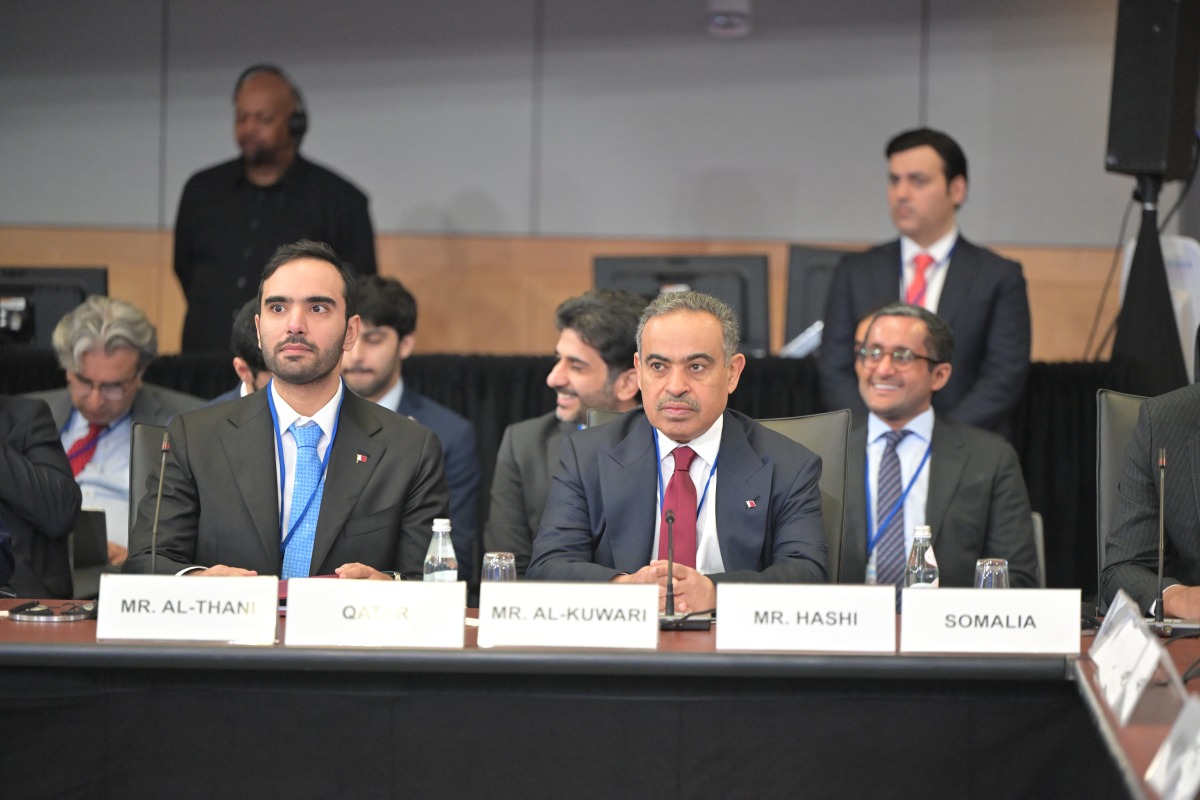
Qatar, represented by its Ministry of Finance, participated in the MENAP Finance Ministers and Central Bank Governors meeting in Washington, D.C. The gathering took place on the sidelines of the IMF/World Bank Spring Meetings.
At the meeting, Qatar was represented by His Excellency Ali bin Ahmed Al Kuwari, Minister of Finance, along with an accompanying delegation. The session was chaired by Kristalina Georgieva, Managing Director of the International Monetary Fund.
The meeting drew finance ministers, central bank governors, and heads of regional financial institutions from Middle East, North Africa, Afghanistan and Pakistan (MENAP).
Agenda & Key Themes
The MENAP meeting addressed multiple high-stakes economic issues affecting its member states. Some of the major topics included:
- Economic growth strategies in a region beset by volatility
- Fiscal policy measures to counter high inflation
- Approaches for sustainable financing and debt management
- The risks of food insecurity and global supply chain disruptions
- Strengthening regional cooperation and policy coordination
During the discussions, participants also reviewed external and internal challenges — such as inflation pressures, commodity price shocks, and geopolitical risks — and emphasized the need for adaptive policy gestures.
Minister Al Kuwari highlighted Qatar’s efforts toward fiscal sustainability through consolidation policies that promote savings and intergenerational fairness. He also reaffirmed Qatar’s commitment to economic diversification, citing the Third National Development Strategy under Qatar National Vision 2030.
He urged collective action to uphold a fair, rules-based global order that allows all nations to prosper.
Why Qatar’s Participation Matters
Regional Influence & Voice
Qatar’s engagement in MENAP demonstrates its desire to contribute to macroeconomic decision-making in the broader Middle East, North Africa, Afghanistan, and Pakistan region. By aligning with regional peers, Qatar strengthens its voice in shared economic challenges and helps shape collective policy responses.
Signaling Economic Maturity & Credibility
Participating in such high-level gatherings underscores Qatar’s standing as a mature economy with significant financial and institutional capacity. It signals that Doha seeks to act not just as a domestic player but also as a regional partner in financial stability.
Coordination, Not Isolation
Global and regional shocks, including inflation, food security stress, and debt burdens, often transcend borders. Qatar’s involvement highlights its willingness to coordinate policy responses with peers, rather than adopting isolated policies that risk misalignment.
Outcomes & Side Engagements
While full communiqués and detailed resolutions have yet to be published, several outcomes and side meetings stood out:
- Qatar reaffirmed its support for IMF efforts in addressing global economic challenges.
- The Qatari delegation also held bilateral talks. For example, Minister Al Kuwari met with his Irish counterpart and with Ajay Banga, President of the World Bank.
- A notable signing occurred: Qatar, via Education Above All Foundation, formalized a cooperation agreement with the World Bank.
These interactions deepen Doha’s diplomatic and financial ties and open new channels for cooperation in education, development, and economic policy.
Broader Regional & Global Context
MENAP Region Under Strain
Many MENAP nations face overlapping challenges: inflation, currency pressures, fiscal deficits, and debt overhangs. The meeting came at a moment when coordinated policy thinking is essential to prevent crisis contagion.
IMF & World Bank Spring Meetings
Since this MENAP session occurred as part of the IMF/WBG Spring Meetings, it allowed MENAP members to tie their regional discourse into global economic agendas, aligning regional priorities with broader multilateral frameworks.
The Case of Diversification & Resilience
Qatar’s emphasis on diversification echoes a larger trend in the Gulf and beyond: reducing dependence on hydrocarbon revenue and building stable, sustainable non-oil sectors. By promoting policies focused on savings, resilience, and inclusivity, Qatar positions itself to better weather external shocks.
Challenges & Critiques
While Qatar’s participation is positive, several challenges remain:
- Implementation Gap – Regional declarations are useful, but turning them into concrete reforms or fiscal action plans is harder.
- Coordination vs Sovereignty – It’s one thing to agree on policy goals; it’s another to align domestic laws, budgets, and institutions.
- Debt Sustainability – Some member countries carry high debt and limited capacity; what works for Qatar might not translate directly elsewhere.
- External Dependencies – Global supply chains, climate shocks, or geopolitics could undercut regional plans.
What to Watch
- Joint Communiqué — Will the MENAP meeting produce a strong joint statement or coordinated roadmap?
- Country Follow-through — Qatar and other members will need to integrate agreed policies into their national budgets, legislation, and institutions.
- IMF/World Bank alignment — How MENAP’s priorities coincide with IMF conditionality, lending, and advice will matter.
- New Partnerships & Projects — Bilateral and multilateral agreements (like that between Qatar’s foundation and World Bank) may signal practical outcomes.
- Monitoring Mechanisms — Will MENAP set up regional monitoring bodies or scorecards to track progress on inflation, diversification, and fiscal health?
Conclusion
Qatar’s active role in the MENAP Finance Ministers & Central Bank Governors meeting reinforces its ambition to engage deeply in regional economic governance. With representation at the table, Doha both contributes and benefits: it helps shape collective policy direction, builds diplomatic and institutional bridges, and underlines its evolving role beyond oil and gas.
In a region beset by economic fragility, food risks, inflation, and external pressures, steady coordination and alignment may determine which nations thrive and which struggle. Qatar’s participation signals its readiness—and responsibility—to be part of shaping that trajectory.