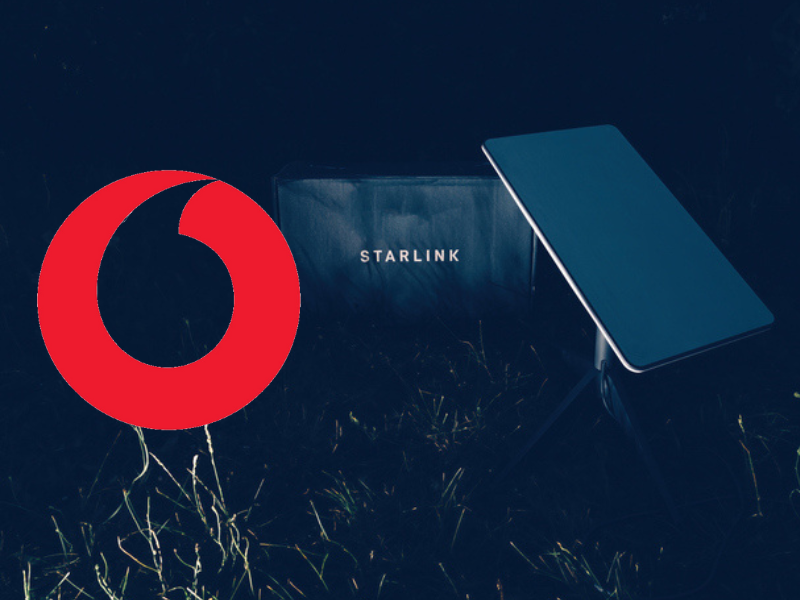
Vodacom Group Ltd. has announced a major partnership with Elon Musk’s Starlink, aiming to bring high-speed satellite internet to its African markets. This groundbreaking deal is set to revolutionize internet connectivity across the continent, with the objective of expanding broadband access to underserved regions, particularly in rural areas. Vodacom, which is the majority shareholder of Safaricom, plans to integrate satellite backhaul technology into its network to extend internet services across its African operations.
The partnership aligns with Vodacom’s ambitious 2030 plan to reach 260 million mobile customers and 120 million financial-service users across its African markets. Despite Vodacom’s extensive footprint of over 223 million customers, rural Africa remains a challenging frontier due to sparse populations, difficult terrains, and low smartphone penetration, which makes traditional mobile tower rollouts prohibitively expensive.
The integration of Starlink’s low-Earth orbit (LEO) satellite technology is seen as a solution to bridge the digital divide in these tough-to-reach regions. By using satellite technology for data relay, Vodacom aims to provide high-speed internet access even in areas where mobile network infrastructure is costly or physically impossible to build.
Vodacom has become an authorized reseller of Starlink equipment and services, enabling it to offer satellite-based connectivity to businesses and enterprises across Africa. This move will provide solutions such as backup connectivity and “unbreakable” internet for critical operations, making it easier for enterprises to stay connected even in remote areas.
CEO Shameel Joosub expressed that the collaboration fits within Vodacom’s Vision 2030 strategy, which focuses on expanding its customer base and reducing Africa’s digital divide. “Low Earth orbit satellite technology will help connect every African to the internet, especially in areas where traditional infrastructure is not feasible,” Joosub remarked.
Although Starlink operates in about 25 African countries, it faces challenges in South Africa, where regulatory barriers related to Black Economic Empowerment (BEE) laws prevent Starlink from launching services. These laws require telecom license holders to have 30% local ownership, a requirement that has drawn criticism from Elon Musk, who has called them “racist ownership laws.” However, South Africa’s communications regulator, ICASA, states that Starlink has not applied for a license.
The South African government, through Communications Minister Solly Malatsi, is currently reviewing submissions on a policy proposal that could allow satellite firms to meet BEE requirements through social investment programs rather than direct equity transfer. While this issue is being resolved, Vodacom and Starlink continue to advance their partnership in other African markets, where they are making strides toward universal internet coverage.
The partnership between Vodacom and Starlink highlights both the potential and complexity of expanding digital access across Africa. While Vodacom’s African competitors, such as MTN Group, are also exploring similar satellite-based solutions, South Africa’s regulatory impasse has left it watching from the sidelines as its neighbors move forward.