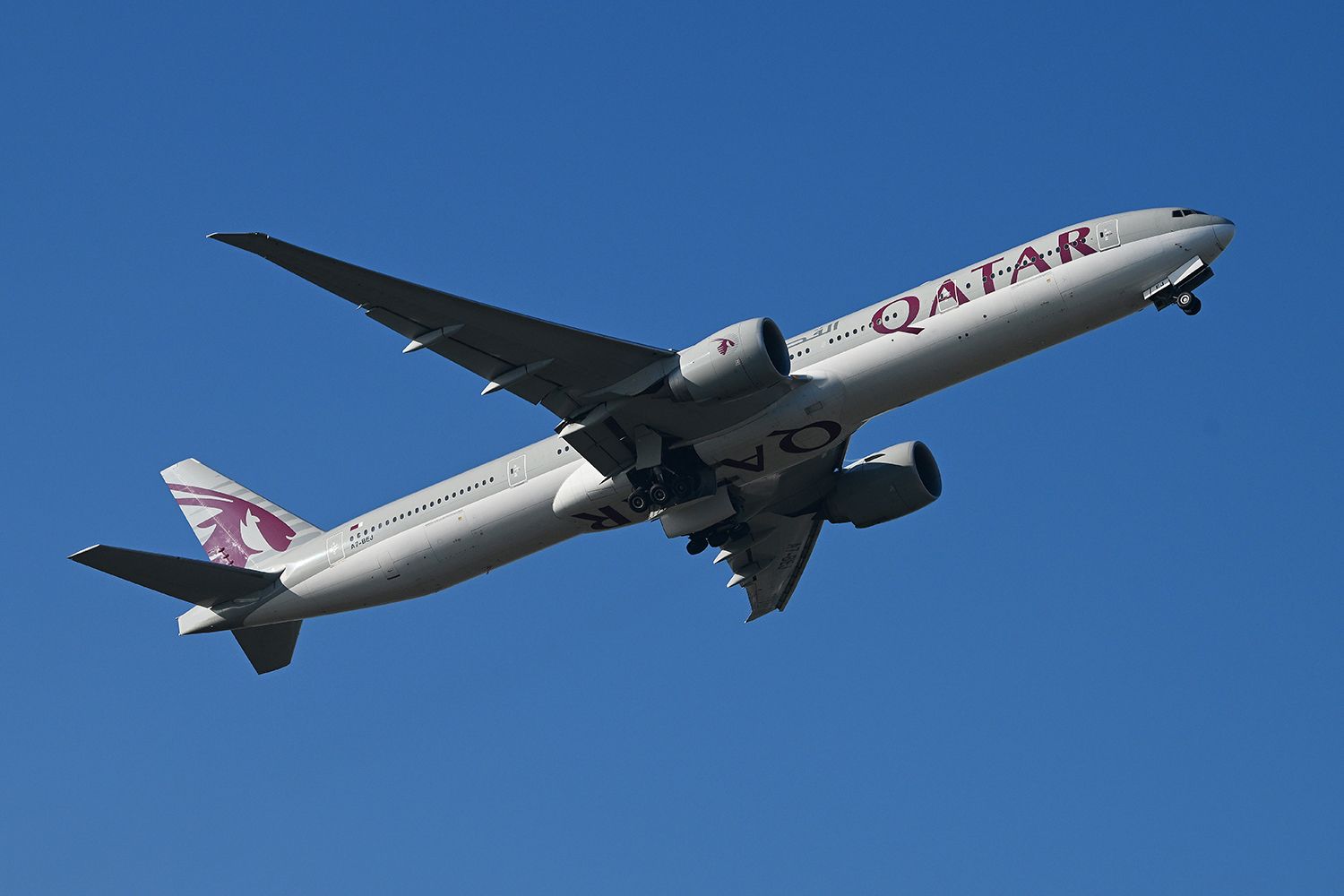
In June 2023, Dr. Asoka Jayaweera, an 85-year-old retired cardiologist and lifelong vegetarian from California, boarded a Qatar Airways flight from Los Angeles to Colombo (via Doha). He had pre-ordered a vegetarian meal for the 15½-hour journey, in line with his dietary convictions.
A few hours into the flight, when the meal service arrived, cabin crew informed him that no vegetarian meals remained. Instead, he was given a standard non-vegetarian dish and reportedly told to “eat around the meat.” According to court documents, shortly after trying to do so, Dr. Jayaweera began choking on part of the food.
That act of “eating around” meat, imposed on someone who had specifically requested a meat-free option, transformed what would otherwise be a standard in-flight mishap into a tragic incident with serious legal and safety implications.
The Onset of Medical Emergency & In-Flight Response
When Dr. Jayaweera started choking, cabin crew intervened immediately. They contacted MedAire, a Phoenix-based medical advisory service that assists airlines during onboard health emergencies by connecting them to ER-trained physicians who guide the crew remotely.
The crew administered oxygen therapy and attempted resuscitation, but Dr. Jayaweera’s condition continued to deteriorate. According to the complaint, at 02:46 UTC, his oxygen saturation had dropped to 69 %, a dangerously low level.
He lost consciousness some hours later. The lawsuit claims he remained unresponsive for much of the rest of the flight.
Diversion Controversy & Arrival at Hospital
As the medical situation worsened, the question of diverting the aircraft became central. The crew and Qatar Airways later claimed that a diversion was not feasible because the flight was over the Arctic Circle/Ocean, making an emergency landing impossible.
However, Dr. Jayaweera’s son contests that version. He asserts that the plane was over Wisconsin or the U.S. Midwest at the time of the choking — regions well within reach of major airports capable of accommodating an emergency landing.
After approximately eight hours, the aircraft diverted to Edinburgh, Scotland. From there, Dr. Jayaweera was taken to a local hospital, where he was pronounced dead on August 3, 2023.
The official cause of death was aspiration pneumonia — a lung infection triggered when food, liquid, or vomit enters the lungs rather than being swallowed properly. Especially in the elderly, such complications can become fatal.
Legal Action: Wrongful Death Lawsuit & Claims
Dr. Jayaweera’s son, Surya Jayaweera, filed a wrongful death lawsuit against Qatar Airways in a California court. He alleges negligence both in failing to honor the pre-ordered vegetarian meal and in failing to manage the in-flight medical crisis appropriately.
The claim invokes the Montreal Convention, an international treaty that holds airlines strictly liable for injuries or deaths occurring on international flights, though with a statutory limit for compensation (approximately $175,000 or 128,821 Special Drawing Rights) unless the airline can prove it was not negligent. Surya is seeking damages beyond this limit, arguing that the airline’s negligence warrants additional compensation.
The lawsuit specifically questions:
- Why the airline did not reserve enough vegetarian meals or ensure backup stocks
- Why flights were allowed to continue rather than diverting earlier
- Whether the crew’s medical response was timely and adequate
- Whether Qatar Airways’ insistence it could not divert due to geography was factually accurate
Qatar Airways has not publicly responded to the lawsuit as of now.
Broader Implications: Dietary Requests, Airline Protocols & Passenger Safety
The tragic case has stirred debate across the travel and regulatory sectors about how well airlines handle special dietary requests and in-flight medical risks, especially for older or medically fragile passengers.
Dietary Accommodations and Protocol Gaps
Many airlines, including Qatar Airways, offer “special meals”, including vegetarian, vegan, kosher, halal, gluten-free, etc. But in practice, catering constraints, miscounts, or communication errors sometimes cause airlines to run out. In such instances, staff might suggest passengers “eat around” parts of a dish — a workaround that may seem benign but can prove dangerous under certain conditions.
For someone strictly vegetarian, ingesting or handling meat may trigger choking risks (e.g., unfamiliar textures), allergic reactions, or even ethical distress, besides violating expectations. In this case, the instruction to “eat around” meat arguably exposed Dr. Jayaweera to avoidable harm.
This incident may prompt regulators and airlines to reexamine protocols, including:
- Ensuring backup stocks of special meals
- Clearer communication protocols when meals run out
- Mandatory crew training for handling dietary emergencies
- Escalation procedures if a passenger with medical vulnerabilities is affected
Medical Emergencies in the Air
Airline crews routinely train for common medical events (e.g., fainting, cardiac distress, simple choking). But a situation like this — where a choking event triggers prolonged respiratory compromise and oxygen desaturation over hours — tests both medical protocols and decision-making around diversions.
Key questions include:
- When should a crew decide to divert a flight to save a life?
- Are crew authorized and trained to override route and schedule constraints?
- Does altitude, flight path, or logistics correctly constrain diversion decisions?
- How effectively do remote medical advisory services support in-flight crises?
In this case, the conflicting claims — crew saying diversion was impossible vs. the family arguing diversion was feasible — may set precedents in how airlines justify or contest in-flight medical decision-making.
Legal Precedents & Airline Liability
If the court finds in favor of Mr. Jayaweera’s estate, it could create a strong precedent where airlines face higher liability when they fail to meet dietary commitments or respond inadequately to midair medical emergencies — especially in aging populations.
Airlines may face pressure to upgrade standards, from stricter documentation of dietary orders to more robust in-flight medical readiness (e.g., advanced airway kits, more frequent training, or decision protocols for diversion).
Moreover, the case underscores that passenger rights do not pause once they board. Dietary requests, medical conditions, and safety assurances remain binding commitments— and failures may trigger legal as well as reputational consequences.
Challenges & Areas of Uncertainty
While the narrative is powerful, several key facts remain disputed or unclear:
- We don’t know exactly which food item caused the choking. The lawsuit describes only that he was “eating around” meat when choking began.
- The geographic position of the aircraft at the time of emergency is contested: the airline claims over Arctic zones, while the plaintiff claims it was over a divertible U.S. region.
- Whether crew actions (oxygen, airway assistance) conform exactly to best practices in aviation medicine is subject to expert testimony.
- Some aspects may hinge on the age and health profile of Dr. Jayaweera, such as whether he had underlying swallowing dysfunction (“dysphagia”) or vulnerabilities that increased his risk of aspiration.
Conclusion
Dr. Asoka Jayaweera’s death emerges as a tragic and cautionary tale at the intersection of airline operations, passenger rights, dietary accommodations, and emergency medical protocols. A dinner tray mishap — intensified by a failure to honor a simple vegetarian request — escalated into a fatal medical crisis.
The wrongful death lawsuit now compels a reexamination of how airlines plan for vulnerable passengers, how crews respond when things go wrong, and how the balance between logistics and human life should tilt in crisis.