On September 9, 2025, Israeli fighter jets carried out a rare airstrike in the Leqtaifiya district of Doha, Qatar. Their target was a residential compound believed to house Hamas political leaders who were meeting as part of U.S.-backed ceasefire negotiations.
Although Israel claimed the attack aimed to eliminate top Hamas commanders, none of the intended targets were killed. Instead, the explosion took the life of the son of senior Hamas official Khalil al-Hayya, several of his bodyguards, the director of his office, and a Qatari security officer. The shockwave rattled nearby homes, schools, and embassies.
Immediate Fallout: Outrage and Threats to Mediation
The bombing stunned the region. Qatar condemned the act as a “reckless criminal attack,” calling it a flagrant violation of sovereignty and even labeling it “state terrorism.”
Prime Minister Sheikh Mohammed bin Abdulrahman Al Thani warned that such aggression threatened Doha’s ability to mediate peace. Hamas described the strike as a direct attempt to kill the negotiation process, not just its leaders.
Across the Arab world, condemnation was swift. Governments in Saudi Arabia, the UAE, and Jordan, along with the United Nations, denounced the strike as a breach of international law. Western diplomats privately expressed concern that Israel’s decision could fracture the delicate balance required for talks to continue.
At that moment, Qatar—a nation that had spent years balancing relations between Washington, Hamas, and Tel Aviv—seemed ready to withdraw from mediation. Losing its neutral ground would have left the ceasefire talks without direction or trust.
(Sources: Politico, Al Jazeera)
The Turning Point: When Tragedy Sparked Urgency
Ironically, what appeared to be a disaster for diplomacy soon became a catalyst for progress. The attack shifted regional dynamics in several unexpected ways.
U.S. Pressure on Israel Mounts
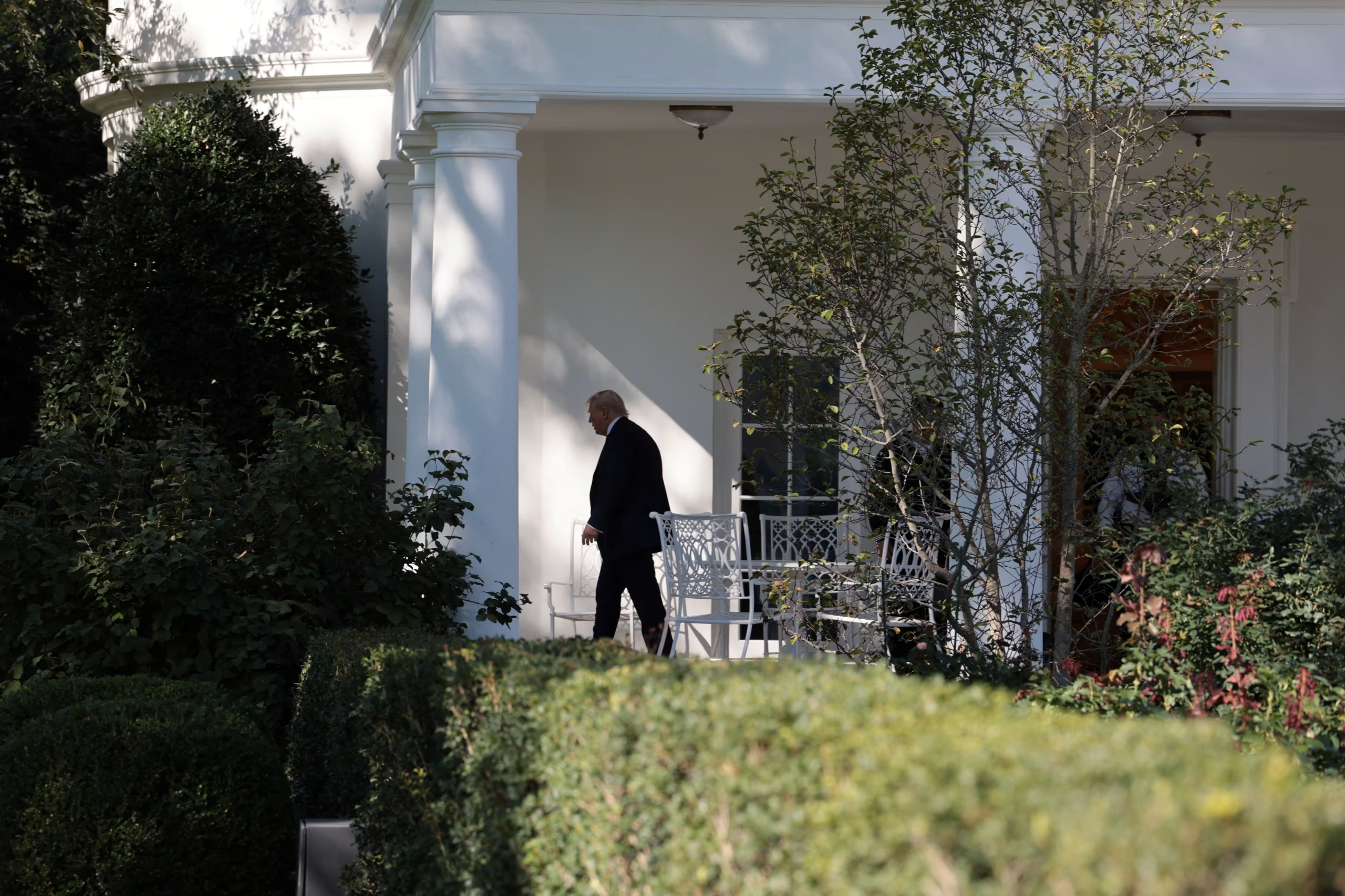
The global outrage gave President Donald Trump new leverage over Israeli Prime Minister Benjamin Netanyahu. Facing pressure from allies and public opinion, the U.S. administration urged Israel to apologize formally to Qatar and guarantee non-recurrence.
Under mounting international scrutiny, Netanyahu complied. The gesture, while symbolic, opened the door to renewed dialogue and signaled that Israel could be held accountable through diplomatic means.
A New Sense of Urgency in Peace Talks
Before the bombing, ceasefire talks had stagnated. But after the Doha strike, mediators felt that time was running out. Another escalation could spiral into regional war. The tragedy gave negotiators a shared sense of urgency: peace had to move from rhetoric to reality.
Qatar’s Role Strengthened, Not Weakened
Contrary to early fears, Qatar did not retreat. Instead, the attack unified Arab and Islamic states in its defense. Within days, Doha hosted an extraordinary summit attended by senior figures from across the Middle East. Participants condemned Israel, reaffirmed support for Qatar’s sovereignty, and recognized its critical role as mediator.
This solidarity strengthened Qatar’s position in negotiations, turning it into a symbol of resilience and leadership.
Israel’s Tactical Shift
For Israel, the political cost of the Doha strike was heavy. The backlash forced its leadership to reassess its military approach and engage more visibly with peace efforts. Netanyahu’s apology, while controversial at home, demonstrated that military operations now carried diplomatic consequences. Israel could no longer act without considering regional blowback.
Hostage Releases and Ceasefire Momentum
The strike occurred during delicate U.S.-led talks on a new ceasefire and hostage-exchange deal. In the aftermath, negotiations accelerated. Mediators pressed for an agreement that combined a ceasefire, hostage release, and governance reforms in Gaza. The bombing, paradoxically, gave that plan the urgency it lacked.
Lingering Obstacles and Fragile Trust
Despite renewed talks, progress remains fragile. Fundamental disagreements still divide the parties. Israel demands Hamas’ disarmament and strict security guarantees, while Hamas insists on political legitimacy and humanitarian access. Each side suspects the other of bad faith.
Qatar continues its mediation, but some in Israel question its neutrality because of Hamas’ political presence in Doha. Meanwhile, international observers wonder whether sovereignty violations like the Doha strike can ever be prevented again. Will this peace process set new norms—or prove that such violations go unpunished?
Why the Doha Attack Changed Everything
The events in Doha reshaped the path to peace for several reasons:
- Breaking the stalemate: For months, talks were frozen. The bombing forced all parties to realize that maintaining the status quo could ignite a regional crisis.
- Redrawing red lines: Israel’s strike on a neutral state showed the world the limits of acceptable escalation. Even its strongest allies condemned the action, redefining boundaries of military conduct.
- Empowering diplomacy: The incident reaffirmed that mediators matter. Qatar’s persistence proved that smaller nations can wield enormous influence in global peace efforts.
- Creating accountability: The bombing triggered calls for international inquiries, legal reviews, and public apologies, making it clear that force would now be met with diplomatic costs.
The Emerging Peace Framework
In the months following the bombing, negotiators began crafting a 20-point peace plan. It aligns with Israel’s security goals—such as disarmament and border control—while addressing Hamas’ political concerns. The proposal includes amnesty for select Hamas figures, hostage exchanges, and a moratorium on new Israeli settlements in the West Bank.
Hamas, for its part, agreed to release hostages without demanding full Israeli withdrawal, relying on U.S. and international oversight to ensure compliance. This marked a significant shift in tone from previous talks.
Washington’s role has also evolved. The United States, long perceived as Israel’s uncritical ally, now acts as an active enforcer of diplomatic discipline, balancing support with pressure.
Risks and the Road Ahead
While progress is visible, the peace process faces constant risk.
- Any renewed violence—from either side—could destroy months of effort.
- Political hardliners in Israel, Qatar, and Hamas may resist compromise.
- Regional interference from rival powers could destabilize fragile agreements.
- Implementation gaps remain: monitoring disarmament, verifying compliance, and guaranteeing humanitarian aid will test the deal’s endurance.
If these challenges are not managed carefully, the peace process could unravel as quickly as it began.
Conclusion: From Tragedy to Transformation
What began as a reckless act of aggression has become a turning point in Middle Eastern diplomacy. The bombing of Doha exposed the vulnerability of existing arrangements but also demonstrated that diplomacy still holds power over destruction.
Qatar emerged stronger, Israel faced new limits, and the U.S. rediscovered its leverage as a broker of peace. The phrase “Qatar was the turning point” now captures a paradox: that tragedy, when met with resolve, can sometimes ignite the very peace it sought to destroy.
Whether that peace holds depends on trust, accountability, and the world’s willingness to defend dialogue over dominance.