Doha / Paris / Gaza – Qatar’s Prime Minister and Foreign Minister, Sheikh Mohammed bin Abdulrahman Al Thani, has revealed that Hamas is willing to discuss how it could ensure it “no longer poses a threat to Israel.”
He explained that some of the most sensitive topics—especially the question of Hamas’ weapons—were postponed during recent peace discussions. According to Sheikh Mohammed, both Israel and Hamas “were not ready for a comprehensive deal” that addressed all issues at once.
The remarks came soon after the first phase of a Gaza ceasefire took effect. That truce followed a multi-party plan mediated by Qatar, the United States, Egypt, and others. The plan includes several stages: the exchange of hostages for prisoners, the gradual withdrawal of Israeli troops from parts of Gaza, and discussions on future governance and disarmament.
Sheikh Mohammed’s Remarks
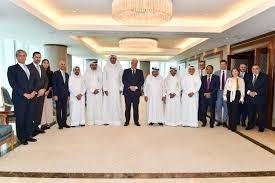
During a press briefing in Paris, Sheikh Mohammed met French President Emmanuel Macron and several Arab and European foreign ministers to discuss the future of Gaza. He said progress had been possible only because negotiators avoided overloading the talks with every contentious issue at once.
“If we had insisted on solving everything immediately, we might not have achieved any progress,” he said.
Regarding weapons, he confirmed that Hamas’ arsenal was not yet on the negotiation table. The mediators had postponed that issue to avoid derailing the process. There was also uncertainty about what would happen to the weapons if they were surrendered—whether they would go to a reformed Palestinian Authority or to another international or regional body.
The Qatari Prime Minister added that there were visible divisions inside Hamas itself. Some members reject any move toward disarmament, while others seem more open to compromise or gradual adjustments.
Why These Talks Matter
For decades, Hamas has resisted all calls to disarm. Its leaders argue that weapons are central to the group’s identity, bargaining power, and its claim to defend Palestinian rights. For Hamas to discuss “not posing a threat” represents a possible shift in tone, even if the group still avoids direct discussion of disarmament.
Israel’s position is equally firm. It demands that Hamas stop launching rockets, digging tunnels, and conducting raids or kidnappings from Gaza. For Israel, the phrase “not posing a threat” implies that Hamas must eventually disarm, submit to international monitoring, or accept full demilitarization. Those conditions remain highly controversial for Hamas.
Mediators—mainly Qatar, Egypt, France, and the United States—are focusing first on urgent humanitarian and security issues. They hope to stabilize the ceasefire, secure hostage releases, and improve humanitarian access before moving toward the more complex questions of arms and governance.
What Has Been Agreed So Far
Phase One:
This stage, already in effect, includes releasing hostages held by Hamas in exchange for Palestinian prisoners and reducing Israeli troop presence in some parts of Gaza. The goal is to create space for aid delivery and rebuild public confidence in the talks.
Phase Two:
The next phase aims to restructure Gaza’s administration. It may involve reducing Hamas’ control, establishing a multinational monitoring force, and setting up frameworks for reconstruction. However, the exact roadmap remains unsettled.
Sheikh Mohammed clarified that the current commitments on disarmament are still vague. Hamas has not yet issued any formal declaration agreeing to lay down arms. The Qatari diplomat’s comments suggest that while Hamas is open to discussions, it insists on key preconditions and clear control over the process.
Key Challenges and Tensions
1. Divisions within Hamas
Not all factions agree on the direction of talks. The more militant wings oppose disarmament and view negotiations as risky, while political leaders see them as necessary to ease international isolation.
2. Israel’s Demands
Israel’s government, led by Prime Minister Benjamin Netanyahu, insists that Hamas must be disarmed or stripped of its ability to launch attacks. Israeli leaders are skeptical that any verbal assurances will be enough without concrete enforcement measures.
3. Weapons Custody
If Hamas agrees to give up weapons, the question arises: who takes them? Some propose the Palestinian Authority, while others suggest an international force or neutral custodian. Each option carries political and security risks.
4. Trust and Verification
Ensuring that both sides follow through is difficult. Past ceasefires have collapsed amid mutual accusations of violations. Any deal would likely require third-party monitoring and enforcement guarantees.
5. Timing and Sequencing
Pushing too fast could collapse the fragile truce. Moving too slowly risks losing political momentum. Sheikh Mohammed emphasized that success depends on pacing the negotiations correctly and avoiding an “all-or-nothing” approach.
Reactions
From Israel:
Prime Minister Netanyahu reiterated that Israel will not accept a Gaza where Hamas retains weapons. “Disarmament and demilitarization must happen—either through diplomacy or by force,” he said.
From Hamas:
Hamas insists that any talk of disarmament must be part of a broader Palestinian discussion involving governance, rights, and sovereignty. It rejects surrendering weapons under Israeli conditions, but has not denied that talks could continue.
From Mediators:
Qatar, France, and Egypt view Sheikh Mohammed’s remarks as a small but significant step. Diplomats say gradual progress—starting with ceasefire and prisoner swaps—could build the trust needed for longer-term peace discussions.
Possible Scenarios Ahead
Scenario A: Gradual Disarmament
Hamas might agree to limit its heavy weapons or turn over certain stockpiles under international supervision while keeping small arms for local policing. This could be paired with guarantees of political participation and reconstruction aid.
Scenario B: Long-term Truce without Full Disarmament
A renewable ceasefire lasting five to ten years could allow rebuilding in Gaza while Hamas keeps some weapons under a pledge of non-aggression. Such an arrangement could reduce hostilities without solving the core issues.
Scenario C: Collapse of the Deal
If trust erodes or political pressures rise, talks could break down. Renewed violence or retaliatory strikes would follow, erasing months of diplomatic work.
Scenario D: International Oversight
Some mediators propose a multinational or Arab-led peacekeeping mission to monitor compliance, secure borders, and support reconstruction. This would require broad regional and global consensus.
Global Implications
Humanitarian Relief
The Gaza war has displaced hundreds of thousands and devastated infrastructure. Every day of ceasefire brings vital aid and medical access to civilians.
Diplomatic Impact
If Hamas continues to engage in dialogue about reducing threats, it could reshape how non-state armed groups negotiate internationally. It may also influence peace frameworks for conflicts elsewhere in the Middle East and Africa.
Israeli Domestic Politics
The Israeli government faces strong public pressure to prevent Hamas from rearming. Balancing these demands with diplomatic realities will test Netanyahu’s leadership.
Regional Stability
Qatar’s mediation has reaffirmed its role as a key diplomatic bridge between Western powers and Islamist groups. Meanwhile, France and Egypt’s participation signals wider European and Arab interest in ending the cycle of violence.
Conclusion
Qatar’s announcement that Hamas is ready to discuss how it can “avoid posing a threat to Israel” could mark an early step toward ending years of bloodshed. Still, the road to peace remains narrow. Weapons, governance, and verification remain unresolved.
Progress depends on building trust through smaller, practical steps—such as hostage exchanges, ceasefire extensions, and humanitarian access. If these hold, negotiators could move to the next, more difficult phases.
Whether this dialogue becomes a historic breakthrough or another missed opportunity will depend on the willingness of all sides—Hamas, Israel, and the mediators—to compromise and sustain peace efforts beyond the battlefield.