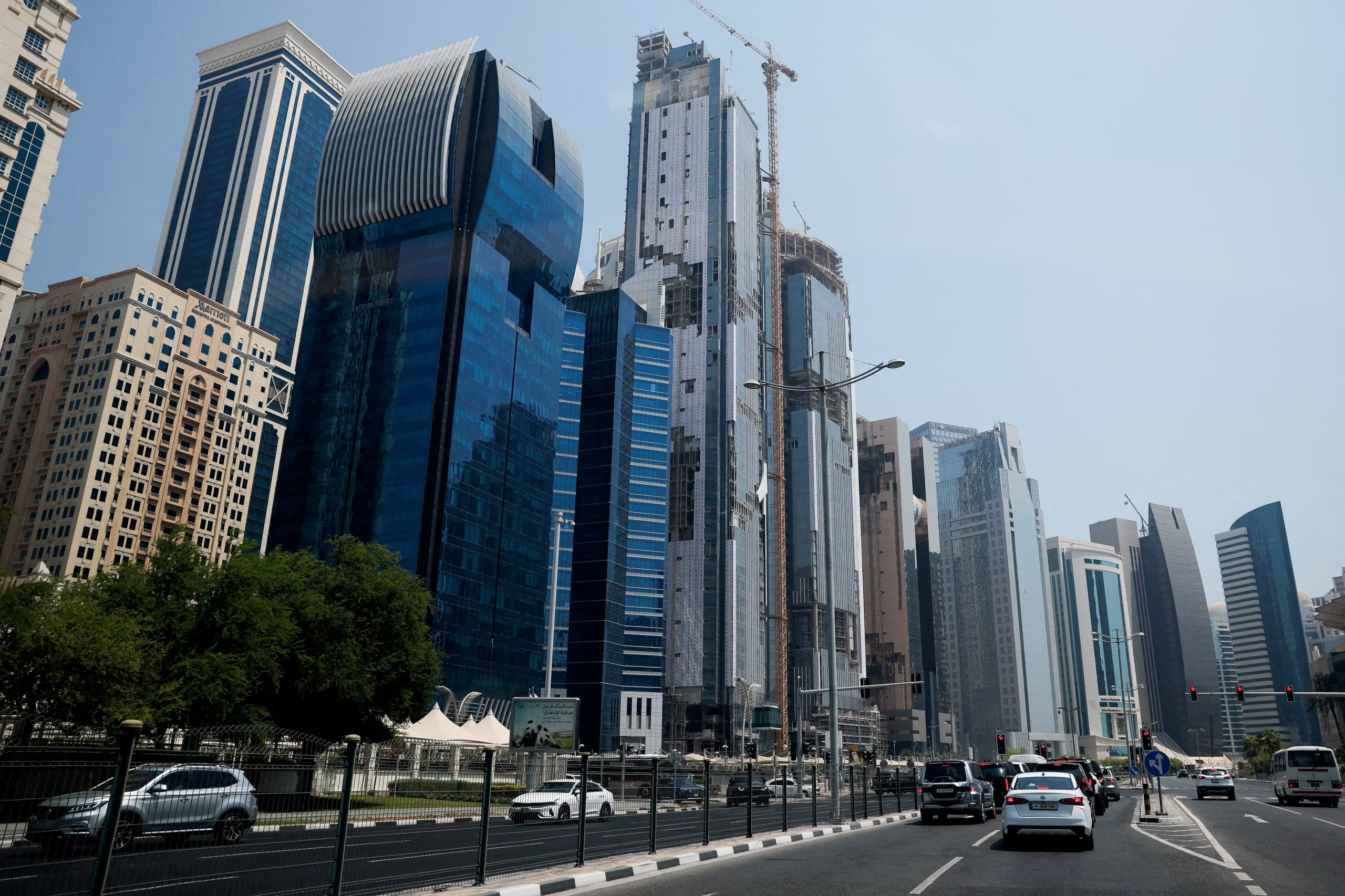
Doha, Qatar – October 26, 2025:
Qatar has officially completed its preparations to host the third edition of Web Summit Qatar, which will take place from February 1–4, 2026. Organisers announced that this upcoming edition will be the largest and most ambitious yet, welcoming more than 30,000 attendees from over 120 countries.
The Government Communications Office (GCO) and the Permanent Web Summit Qatar Organising Committee confirmed that around 1,500 startups, 700 investors, and 600 media representatives are expected to participate. This marks a significant increase from previous years and highlights Qatar’s growing reputation as a global destination for technology and innovation.
Key Preparations and Build-Up
According to the GCO, preparations are now fully complete across all major areas, including venue logistics, participant services, investor programmes, and media infrastructure. These efforts are part of Qatar’s broader plan to align the event with its innovation and economic diversification goals under the Qatar National Vision 2030.
In addition, the organising committee emphasised the strong response to the “Women in Tech: Pioneers” programme, a flagship track of the summit. Remarkably, tickets for the programme have already sold out, reflecting the region’s increasing enthusiasm for women-led innovation.
Furthermore, HE Sheikh Jassim bin Mansour bin Jabor Al Thani, Director of the GCO and Chairman of the Organising Committee, stated that Qatar is determined to make this year’s summit the most successful yet. He added that the event will showcase Qatar’s readiness to host global events that drive meaningful dialogue and innovation.
Why It Matters
Hosting the Web Summit plays a vital role in Qatar’s long-term economic diversification strategy. Beyond oil and gas, the nation seeks to strengthen its identity as a regional technology hub and a centre for entrepreneurship and digital transformation.
Moreover, the summit provides a rare opportunity for global and regional participants to exchange insights on emerging sectors such as artificial intelligence (AI), fintech, healthtech, and sustainability — all of which are core pillars of Qatar’s future economy.
For startups, this event represents more than just visibility. It offers networking opportunities, access to investors, and mentorship programmes that can accelerate growth. Consequently, interest from more than 60 countries demonstrates Qatar’s rising global profile as a tech-friendly and investment-ready destination.
Numbers and Ambitions
Reports from the organisers highlight record-breaking projections for 2026:
- Over 30,000 attendees from 120+ countries
- Approximately 1,500 startups
- Around 700 investors
- Nearly 600 international media outlets
In addition, demand for exhibition space, speaker slots, and masterclass sessions has already surpassed expectations — even though the event is still months away.
This year’s summit will also feature several new thematic tracks, including the New Media Summit, Sports Summit, and Health Summit. These additions aim to expand the event’s focus beyond traditional technology and address evolving global challenges.
Building on Previous Success
The Web Summit first arrived in Qatar in 2024, under a long-term agreement to host the event annually until 2028. The inaugural edition marked a milestone for the region, while the second edition in February 2025 achieved remarkable success — drawing 25,000 participants, 1,520 startups, and 723 investors from 124 countries.
Since then, local participation has grown steadily. Notably, the number of Qatari-based startups almost doubled, and the proportion of women-founded companies saw a significant increase. Therefore, the 2026 summit will build upon this momentum and benefit from Qatar’s enhanced infrastructure, experience, and logistical efficiency.
Strategic Drivers Behind Hosting
There are several reasons why Qatar continues to invest heavily in hosting this global technology event:
- Economic diversification: The Web Summit supports Qatar’s transition toward a knowledge-based economy, reducing dependence on hydrocarbons.
- Global branding: Hosting major innovation summits strengthens Qatar’s international image as a modern and visionary nation.
- Startup ecosystem growth: The event fosters collaboration between local entrepreneurs, venture capitalists, and global investors.
- Regional leadership: By hosting such events, Qatar positions itself competitively among other Gulf Cooperation Council (GCC) nations.
- Infrastructure advantage: Doha’s world-class venues, hotel capacity, and transport network give it a clear edge in managing large-scale global events.
Challenges and Opportunities
Naturally, organising a massive technology event presents both opportunities and challenges.
On the opportunity side, Qatar stands to benefit from several outcomes. For instance, the summit can boost tourism and hospitality revenues during the winter season. It can also attract foreign investment, spark regional partnerships, and provide visibility to emerging Qatari entrepreneurs.
However, the organisers also face potential challenges. Managing logistics for over 30,000 participants requires precise coordination. Moreover, the event must deliver measurable results — such as new startups launched, funding deals signed, or strategic alliances formed — to justify its scale.
Additionally, maintaining content relevance will be crucial. With numerous global tech events vying for attention, Qatar must offer distinctive programming, insightful speakers, and tangible post-event value.
Finally, there is the need to ensure that local innovators and global visitors connect meaningfully. Without strong integration mechanisms, the benefits could remain short-term rather than contributing to Qatar’s long-term innovation ecosystem.
What to Watch Ahead
As the summit approaches, several key indicators will help gauge its success:
- The final speaker lineup, featuring global CEOs, thought leaders, and government officials.
- The ratio of international to regional startups, and how many secure partnerships or funding.
- The exhibition footprint, including national pavilions and Qatar-based innovations.
- The media impact, measured through international coverage and PR reach.
- Post-event legacy outcomes, such as startups launching in Qatar or establishing long-term collaborations.
- The progress of Women in Tech initiatives and other diversity programmes.
Each of these factors will reflect not only the event’s immediate success but also its contribution to Qatar’s innovation legacy.
Conclusion
With preparations complete and fewer than 100 days remaining, Qatar stands ready to deliver its largest Web Summit to date. The event will undoubtedly reinforce Doha’s position as a regional hub for technology, innovation, and entrepreneurship.
Nevertheless, the ultimate measure of success will lie beyond attendance figures. It will depend on how effectively the summit drives real investment, knowledge exchange, and sustainable startup growth aligned with the Qatar National Vision 2030.
If Qatar manages to translate this momentum into lasting outcomes, Web Summit 2026 could become a defining milestone — not only for the nation’s digital economy but also for the Middle East’s emergence as a global innovation powerhouse.