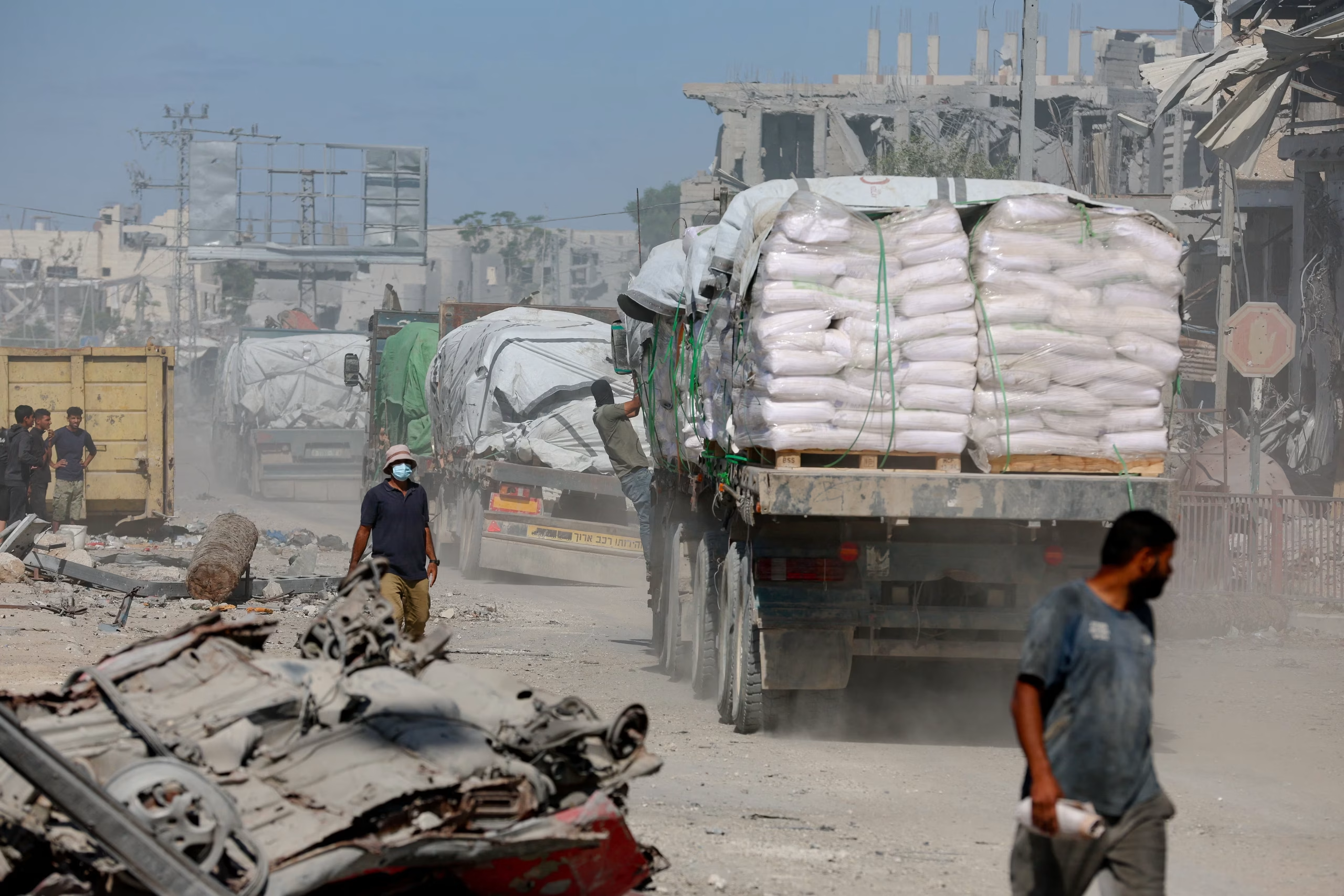
Humanitarian conditions in Gaza remain deeply distressing after months of conflict and destruction, but Qatar’s sustained humanitarian efforts are providing critical relief to thousands of affected civilians. Through coordinated land, air, and sea operations, Qatari organizations have supplied food, medical aid, shelter materials, fuel, and other essential items to those displaced or cut off from basic necessities. Despite logistical hurdles and security risks, these efforts continue to serve as a lifeline for tens of thousands of people in desperate need.
What Qatar Has Delivered
Since the latest ceasefire took effect, Qatar has intensified its humanitarian intervention through major aid initiatives.
Qatar Charity has implemented 26 humanitarian projects in Gaza covering immediate relief, temporary shelter, healthcare, education, and non-food essentials. These operations are designed to provide both short-term survival and medium-term stability for displaced families.
More than 504 trucks loaded with food, medicines, and emergency shelter supplies have crossed into Gaza via Jordan. These convoys carried 46,000 food parcels, 20,000 tents, 23,000 liters of diesel, and 246,000 liters of gasoline, ensuring communities could cook, heat, and power essential systems.
In parallel, the Qatar Fund for Development (QFFD) dispatched over 800 additional trucks loaded with tents, flour, blankets, hygiene kits, and medical items. Helicopter drops added about 29,000 boxes of medicines, including antibiotics for hospitals running low on critical drugs.
Qatar also launched an air bridge to deliver urgent medical aid to hospitals, particularly in southern Gaza around Khan Younis, where conditions are especially dire. These air deliveries included surgical instruments, emergency field hospital materials, and specialized medicines that could not be transported safely by land.
Through cooperation with the Jordan Hashemite Charity Organization, Qatari aid has reached Gaza via multiple corridors, carrying food, fuel, winter supplies, baby milk, and clothes for families enduring severe shortages.
Who Receives the Aid and the Impact on the Ground
Qatar’s aid is directed toward the most vulnerable segments of Gaza’s population—displaced families, children, the elderly, and those with medical needs.
Thousands of tents, mattresses, blankets, and hygiene kits have been distributed to people forced to live in overcrowded camps or damaged buildings. These items provide minimal but essential protection against cold nights and rain.
Food insecurity, once widespread across Gaza, has eased slightly where Qatar’s convoys have reached. Regular delivery of food parcels, flour, and baby formula has prevented starvation in many areas where markets have collapsed or run out of stock.
Medical aid has had a life-saving impact. Hospitals that once faced closures due to medicine shortages are now able to treat patients, perform surgeries, and support maternity care. Fuel supplied by Qatar has powered hospital generators, restored partial electricity to key zones, and enabled water systems to function temporarily.
Access to clean water has improved in areas where generators and water pumps could operate again, reducing the risk of disease outbreaks. These combined efforts are keeping basic life support systems running under extremely difficult circumstances.
Scale, Coordination, and Logistics
Qatar’s humanitarian network relies on multilateral coordination and precise logistics. Aid flows through several key entry points, including the Rafah crossing from Egypt, the King Hussein Bridge via Jordan, and routes through the West Bank.
Jordan’s logistical hubs, particularly warehouses in Amman, play a central role in storing and dispatching supplies. Trucks then form large convoys escorted by security and aid personnel, ensuring safe passage where possible.
When ground routes are blocked or unsafe, Qatar activates air-bridge operations using helicopters and cargo planes to drop critical supplies—especially medical kits and high-value humanitarian cargo that must reach hospitals urgently.
Remaining Challenges
Despite Qatar’s success in reaching thousands of families, numerous challenges persist.
Border closures remain the most significant barrier. The Rafah crossing, often closed or restricted, causes major delays in aid flow. Each shutdown forces convoys to wait for days, risking spoilage of perishable goods and fuel depletion.
Fuel scarcity continues to hinder water and power generation. Hospitals struggle to maintain operations when diesel supplies run out, and backup generators cannot cover prolonged outages.
Security concerns inside Gaza complicate aid distribution. Damaged roads, debris, and ongoing hostilities make travel within the territory risky and unpredictable. Some convoys are rerouted or delayed to protect staff and ensure supplies reach intended areas.
The scale of destruction is another challenge—tens of thousands of homes, schools, and health centers have been damaged or flattened. Emergency aid can only cover survival needs; rebuilding requires long-term international funding and coordination.
Winter poses additional threats. Cold nights, rain, and wind expose families in tents to harsh conditions. Qatar’s aid has included blankets and warm clothing, but needs far exceed current supplies.
Recent Developments and Diplomacy
In recent months, Qatar’s diplomatic mediation has been instrumental in brokering ceasefire agreements that allow humanitarian corridors to open. These negotiations, often in partnership with Egypt and the UN, have enabled larger aid convoys and temporary relief for civilians.
The UN has confirmed readiness to scale up operations once access is assured, coordinating with Qatar to send hundreds of additional trucks with essential items.
However, aid access remains volatile. Reports indicate that Israel has at times limited the number of trucks entering Gaza, citing ongoing negotiations and security reasons. Humanitarian organizations have warned that these restrictions risk reversing progress made in recent months.
Qatar continues to advocate for unhindered humanitarian access and protection for aid workers, stressing that humanitarian support must remain independent of political conditions.
Why Qatar’s Aid Matters
Qatar’s response is one of the largest and most sustained in the region. Its impact can be seen through several dimensions:
- Comprehensive approach: Qatar delivers food, medicine, shelter, fuel, and education aid—addressing multiple layers of human need.
- Speed and scale: Air-bridges, convoys, and partnerships enable rapid mobilization.
- Focus on vulnerability: Children, the sick, and displaced populations remain top priorities.
- Moral leadership: Continuous support from Qatar sends a message of solidarity to Gaza’s people and inspires other nations to contribute.
These efforts demonstrate how humanitarian commitment, when coupled with diplomatic leverage, can help sustain life amid destruction.
What’s Next: Path Toward Recovery
To strengthen impact and transition from relief to recovery, several steps are essential:
- Guarantee open access through all border crossings.
- Increase fuel shipments to stabilize hospitals and water systems.
- Expand education, mental health, and psychosocial programs for children.
- Empower local organizations to manage aid distribution efficiently.
- Mobilize long-term reconstruction funds for infrastructure repair.
Rebuilding Gaza’s future will require sustained coordination, not only from Qatar but also from the broader international community.
Conclusion
Qatar’s humanitarian mission in Gaza stands as a beacon of hope amid devastation. Its aid operations—spanning food, medicine, shelter, and fuel—are saving lives every day. Through diplomacy, coordination, and compassion, Qatar continues to ease suffering and restore dignity to those caught in crisis.
While challenges remain immense—restricted access, fuel shortages, and infrastructure collapse—the persistence of Qatar’s efforts underscores a powerful truth: even in the hardest conditions, sustained humanitarian action can keep hope alive and lay the foundation for recovery.