In the complex and fractious landscape of the Israel–Hamas conflict, Qatar has carved out a unique niche as a mediator. More than just a facilitator, Qatar’s influence, relationships, and diplomatic credibility make it pivotal to whether a ceasefire can endure. With new agreements being signed and renewed attempts underway, the Gulf emirate’s legitimacy is under test — and its success or failure may define the stability of Gaza’s future.
Qatar’s Mediation Track Record & Leverage
Longstanding Ties & Access
Qatar’s role as mediator stems from deep relationships with various actors. It has hosted Hamas’s political office in Doha, allowing direct contact with the group’s leadership. That access gives Qatar standing — something few other states possess.
At the same time, Qatar maintains relations with Western and regional powers. Its balancing act — leaning neither fully one way nor the other — gives it room to act credibly as neutral broker.
Previous Ceasefire Successes
Qatar has helped broker prior ceasefires and hostage-release deals in Gaza. For instance, in January 2025 it worked alongside U.S. and Egyptian mediators to bring about a truce and prisoner exchange.
These past achievements give it diplomatic currency: parties involved often see Qatar as one of the few states that can bridge the divide.
The New York Declaration & Qatar’s Shifting Role
At the heart of the current ceasefire framework lies the July New York declaration, in which four guarantor states (including Qatar) endorsed key principles. Qatar for the first time endorsed the principle that Hamas relinquish rule and disarm in favor of the Palestinian Authority. This marks a shift from Qatar’s earlier posture of neutrality toward alignment with broader Arab state consensus.
This shift is delicate: while it strengthens Qatar’s legitimacy among key Arab states (particularly those urging stronger conditions of governance in Gaza), it also demands Qatar press more on Hamas — potentially straining its mediator role.
The Stakes & Tasks Ahead
For a ceasefire to hold, Qatar must perform several critical roles:
- Enforcing Disarmament & Political Transition
Qatar must oversee or at least facilitate steps toward Hamas disarmament and governance transition to the Palestinian Authority — tasks rife with danger and resistance. - Managing Humanitarian Relief
Reconstruction and aid delivery must become more regulated, transparent, and accountable. Qatar’s involvement in multilateral mechanisms is vital to avoid the chaos of parallel aid systems. - Monitoring & Verification
Qatar (with partners) must build systems or bodies to monitor ceasefire compliance, hostages’ status, and transitions in governance in Gaza, backed by credible observers. - Diplomatic Pressure & Guaranteeing Commitments
Qatar must help bind Israel, Hamas, and PA to commitments made — even when tensions spike or violations occur — leveraging its relationships and international backing. - Bridging Between Global Powers & Local Actors
Qatar must maintain trust both with powerful external actors (U.S., others) and with Palestinian factions. As mediator, it must resist being seen as biased or merely a mouthpiece for others.
Challenges & Risks
Israeli Strikes in Qatar & Credibility Pressures
A major test of Qatar’s neutrality involved an Israeli airstrike in Doha targeting Hamas figures. The strike rattled the diplomatic equilibrium, raising questions about Qatar’s vulnerability and whether its mediator role could survive direct attacks.
Critics wonder whether Qatar can press Hamas to cede power if it must at times confront Israeli aggression on its soil. Maintaining credibility with both sides becomes harder.
Internal Resistance & Factionalism
Hamas leadership and rank-and-file may resist disarmament or changes to control. Meanwhile, the Palestinian Authority may face pushback from its constituents over absorbing jurisdiction. Qatar must navigate deeply embedded internal resistance.
Balancing Regional Politics
Qatar is not isolated: it operates amid a web of Gulf rivalries, strategic alliances, and external pressures (U.S., Iran involvement, Saudi Arabia, Egypt). Its mediation must not be seen as a proxy for any side.
Enforcement Without Force
Qatar does not command military power in Gaza. Its influence is soft — diplomatic, economic, moral. That means enforcement relies on moral suasion, conditional aid, and third-party guarantees — which can all be fragile.
Reputation & Backlash
If Qatar fails or is seen to tilt too far, its role as mediator could be discredited. Parties might turn instead to tougher mediators or impose stricter terms.
Why Qatar, Not Others?
Why is Qatar central when many other states could participate?
- Existing Channels & Trust: Qatar’s established channels with Hamas and Israel (and other regional actors) give it more trust than newcomers.
- Continuity & Institutional Knowledge: Qatar has the institutional memory, diplomats, and mechanisms to carry mediation across ruptures.
- Geopolitical Cushion: Its status as a wealthy Gulf state with relatively independent foreign policy gives it space others may lack.
- Soft Power Investment: Since conflict mediation forms part of Qatar’s identity and foreign policy (e.g. “soft diplomacy”), it has institutional motivation to maintain success.
Recent Moves & Signals
- Qatar, along with Egypt and Turkey, recently signed a ceasefire guarantor document with U.S. President Trump at a summit in Sharm El-Sheikh. This formalizes Qatar’s role in the deal.
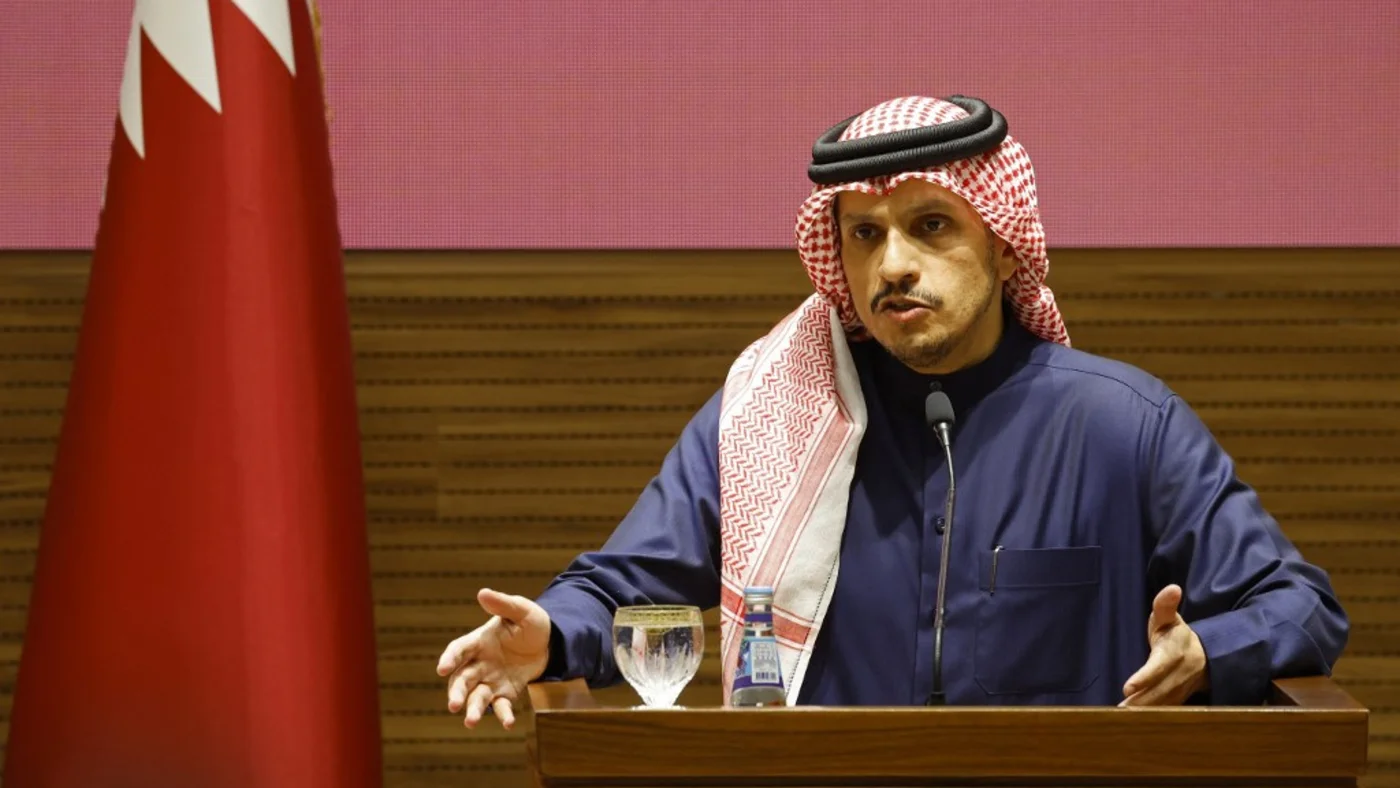
- Qatari Prime Minister Sheikh Mohammed bin Abdulrahman al-Thani defended the country’s role after the Israeli strike, saying mediation is part of Qatari identity and that it would not be deterred.
- Qatar is reportedly adjusting its media portrayal of Hamas, pushing a more nuanced narrative, likely to match evolving diplomatic posture.
- Qatar is pushing for structured multilateral aid mechanisms, rather than informal channels, to increase trust in reconstruction efforts.
What Will Determine Success?
- Partial vs. Full Ceasefire: Whether the ceasefire holds beyond a narrow pause to become a sustained truce.
- Disarmament & Transition: Whether Qatar helps facilitate actual disarmament and governance transfer, rather than just symbolic commitments.
- Institutional Oversight: Whether monitoring mechanisms (with international or neutral parties) are strong enough to detect violations and respond.
- Aid Governance & Reconstruction: Whether aid is nonpartisan, transparent, and coordinated under credible systems.
- Credible Backup Guarantees: Qatar’s ability to bring in external guarantors — regional powers or international bodies — to back the deal.
- Resilience to Shocks: Whether it can withstand provocations, violations, or escalations without collapse.
Possible Scenarios
- Sustained Ceasefire & Reconstruction
A best-case scenario is a long-term truce, gradual disarmament, PA reasserted control, and international aid with Qatari oversight. - Fragmented Ceasefire with Violations
Skirmishes or violations lead to intermittent flare-ups; mediation is stretched but remains active. - Collapse & Reversion to War
A major breach (e.g. mass attack, failure to release hostages) causes the truce to fail and negotiations to reset or break. - Broker Role Dilutes
Qatar’s role weakens if either side sees it as biased or ineffective; others may try to replace it.
Conclusion
Qatar’s emergence as mediator in chief in Gaza is a formidable diplomatic gamble. Its deep ties, previous successes, regional standing, and credibility make it one of few actors capable of bridging the gap between Israel, Hamas, and Palestinian institutions.
Yet today’s context is more demanding: pressures for disarmament, governance transition, sustained reconstruction, and accountability all rest on a tenuous ceasefire. Qatar must manage complex internal and external dynamics, enforce compliance without force, and survive provocations.
If Qatar succeeds, it may cement a legacy of peacemaking — potentially one of the most significant diplomatic achievements of its era. If it fails, the ceasefire may collapse and Qatar’s reputation may suffer. Either way, for Gaza, the mediator may hold the line between fragile peace and renewed war.