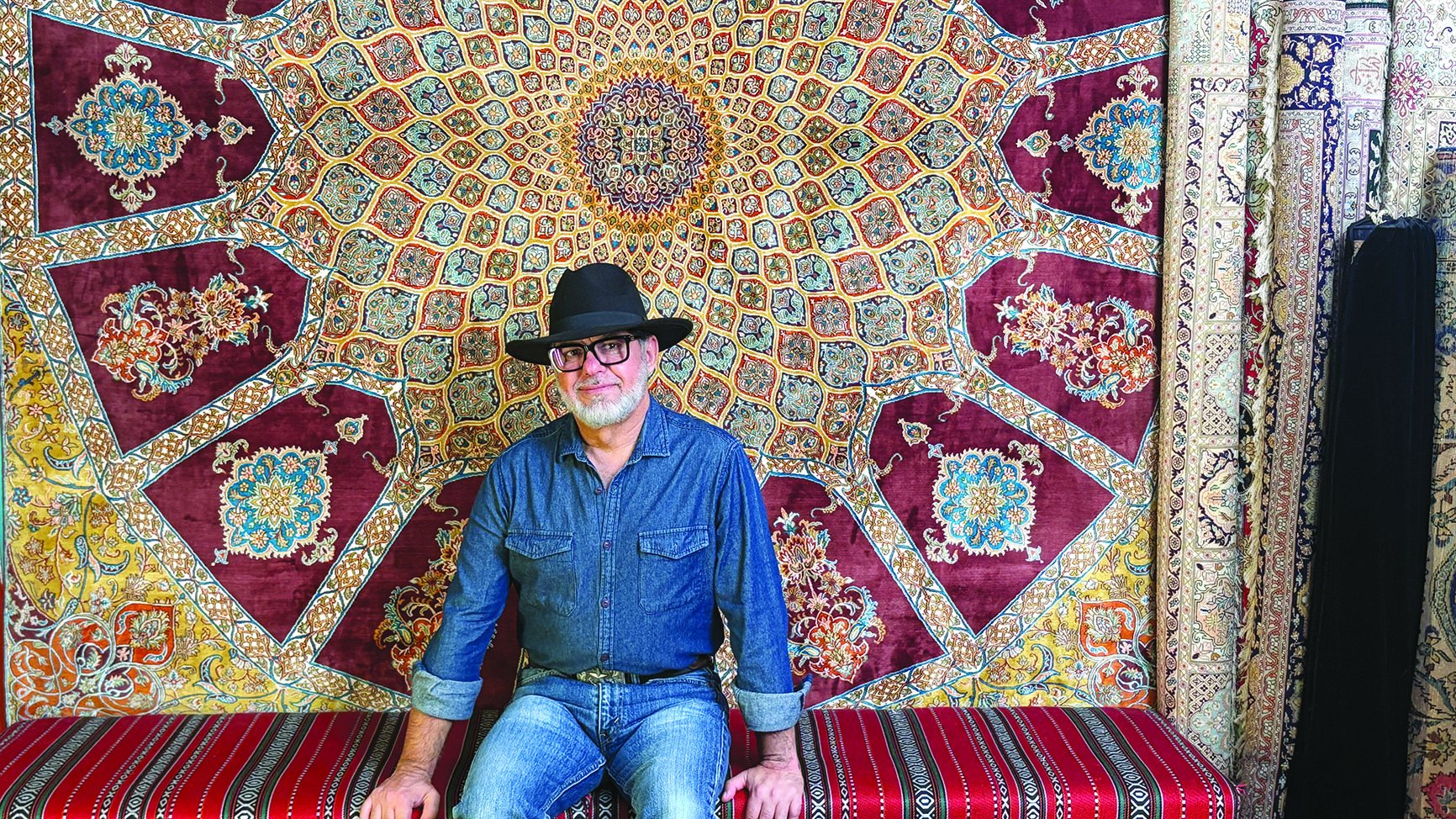
Riyaz Bhat, known as ‘The Rugman of Qatar,’ has been an integral part of the country’s evolving rug trade over the past 26 years. His journey illustrates how Qatar’s niche craftsmanship market has adapted in response to shifts in the global economy, policy reforms, and changing consumer behaviors within the luxury and heritage sectors.
When Bhat founded his rug company in Doha in 2000, the market for specialty art and crafts was in its infancy. “The market was very limited when I started,” Bhat recalls, noting that the competition, businesses, and customers were fewer back then. Since then, local and global factors have reshaped the market, with developments in mass production, economic instability, and political unrest in rug-producing regions such as Iran, Afghanistan, and India posing significant challenges.
As Bhat explains, “Handmade rugs are luxury items,” and economic or political instability often leads to reduced consumer spending on luxury goods, directly affecting artisans and sellers. This was particularly evident during global slowdowns when rising tariffs, trade barriers, and supply chain disruptions led to reduced margins in major markets like the US and Europe.
Despite these global pressures, Qatar’s economic stability and the government’s investment in culture have allowed the local rug trade to thrive. Data from Qatar’s Planning and Statistics Authority shows a steady increase in imports of visual arts and craft products between 2013 and 2018, reflecting sustained consumer interest.
Unlike in many parts of the world, where rugs are considered temporary decor, Qatar views them as lasting investments. “Rugs are a part of the home in the Middle East. They are not replaced; they are passed down,” says Bhat. However, with today’s more cost-conscious consumers, many are opting for machine-made rugs, which has intensified competition for businesses offering handcrafted goods.
“The market has become more niche,” Bhat says, “and buyers are now divided into two main groups: design-conscious buyers seeking statement pieces and collectors interested in craftsmanship, provenance, and heritage.”
For Bhat, educating consumers is key to sales. “You cannot sell a handmade rug without explaining its value,” he states, highlighting the importance of telling the story behind the product. Qatar’s cultural ecosystem, including museums, exhibitions, and heritage initiatives, has significantly raised awareness of traditional arts, boosting consumer confidence and appreciation.
Business operations have also become easier due to Qatar’s improved commercial frameworks, making it simpler for traders and artisans to establish themselves. “Opening a business today is far easier than it was 25 years ago,” Bhat says, citing the positive changes in regulations and support systems.
Despite ongoing challenges like global instability affecting sourcing, pricing, and consumer sentiment, Bhat remains optimistic about the future. “As long as there are people who understand value, this industry will survive,” he says.
As Qatar diversifies its economy, the rug and handicrafts sector serves as a prime example of how heritage-driven businesses can thrive in a modern market. Though small in scale, the sector plays a vital role in cultural preservation and contributes to a more diversified retail landscape, proving that tradition, when strategically aligned with contemporary market trends, can remain commercially relevant.