Hamad International Airport is continuing to expand its international connectivity as more global airlines prepare to resume operations to and from Doha, signaling renewed momentum for Qatar’s aviation sector and regional travel demand. The latest operational update released by the airport confirms that several major international carriers, including Turkish Airlines, Jazeera Airways, RwandAir, and Virgin Australia, are set to restart services over the coming weeks.
The announcement reflects a broader recovery and stabilization effort across international aviation networks serving Qatar, with Hamad International Airport steadily rebuilding its route map and airline partnerships. As one of the Middle East’s leading aviation hubs, the airport’s expanding list of resumed international services highlights growing confidence in regional travel demand, operational capacity, and international passenger movement.
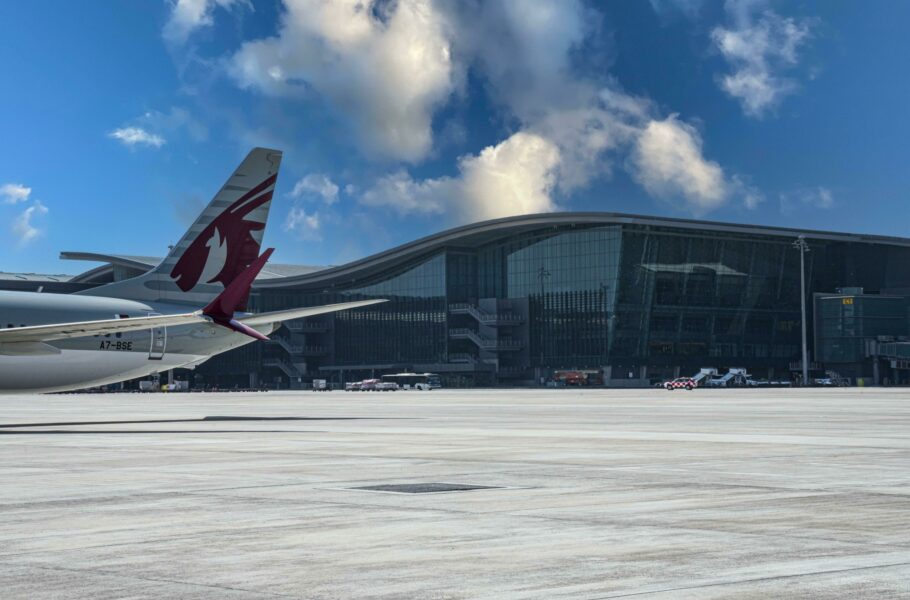
Hamad International Airport (Arabic: مطار حمد الدولي, Maṭār Ḥamad al-Duwalī; IATA: DOH, ICAO: OTHH) is an international airport in Qatar, and the home base of the national flag carrier airline, Qatar Airways. Located east of the capital, Doha, it replaced the nearby Doha International Airport as Qatar’s principal and main national airport and one of the busiest airports in the Middle East.
Formerly known as New Doha International Airport (NDIA) during construction, Hamad International Airport was originally scheduled to open in 2008. After a series of costly delays, it eventually opened six years later, on 30 April 2014, with a ceremonial Qatar Airways flight landing from nearby Doha International. Qatar Airways and all other carriers formally relocated to the new airport on 27 May 2014.[2] The airport is named after the previous Emir of Qatar, Hamad bin Khalifa Al Thani.
According to the updated schedule, multiple foreign airlines will gradually restore services between May and July, adding further connectivity between Doha and major destinations across the Middle East, Africa, Asia, Europe, and Australia. The latest update also reinforces Hamad International Airport’s position as a critical transit and international travel hub linking global markets through Qatar.
More International Airlines Return to Doha
The newest operational update outlines a phased return of several international carriers to Hamad International Airport. The restoration of these services is expected to improve passenger flexibility, strengthen tourism and business travel flows, and support the wider aviation ecosystem connected to Doha.
The latest confirmed airline resumptions include:
| Date | Airline |
|---|---|
| 21 May | Jazeera Airways |
| 2 June | RwandAir |
| 9 June | Turkish Airlines |
| 15 June | Virgin Australia |
| 1 July | Royal Air Maroc |
| 2 July | Malaysian Airlines |
The staggered rollout reflects the complex operational planning involved in restoring international aviation routes, including aircraft scheduling, regulatory approvals, staffing coordination, and regional airspace management.
The addition of these airlines significantly expands travel options for passengers moving through Doha while strengthening Hamad International Airport’s international network reach.
Turkish Airlines Resumption Strengthens Europe and Asia Connectivity
Among the most notable resumptions is Turkish Airlines, one of the world’s largest international carriers with extensive connections across Europe, Asia, Africa, and the Americas.
The airline’s return to Hamad International Airport is expected to improve travel flexibility for both transit passengers and direct travelers between Doha and Istanbul, one of the world’s busiest aviation crossroads. Turkish Airlines also provides onward connectivity to hundreds of international destinations, making its resumption strategically important for regional and global travel flows.
For business travelers, tourists, and international transit passengers, the restored route could help ease travel demand pressure while expanding route flexibility across multiple continents.
The return also reflects strengthening operational coordination between major regional aviation hubs as airlines continue rebuilding international schedules.
Read Also: Old Airport Neighborhood Guide: A Closer Look at Doha’s Hidden Gem
Jazeera Airways Expands Gulf Travel Options
Jazeera Airways will become one of the earliest carriers in the latest resumption schedule to restart flights to Doha. The Kuwaiti airline plays an important role in regional Gulf connectivity and serves passengers traveling between Qatar, Kuwait, and surrounding destinations.
Short-haul Gulf routes remain highly significant for:
- Business travel
- Family travel
- Tourism
- Regional labor mobility
- Medical travel
- Education-related movement
The return of Jazeera Airways strengthens intra-Gulf travel options while supporting broader regional aviation recovery.
As Gulf economies continue investing heavily in tourism, hospitality, and business expansion, improved regional air connectivity remains a major economic priority.
RwandAir Enhances African Connectivity Through Doha
The return of RwandAir also carries strategic significance for Hamad International Airport’s African connectivity network. Doha increasingly serves as an important gateway linking Africa with Asia, Europe, and the Middle East through connecting flights.
RwandAir’s resumed operations could strengthen travel links between Qatar and East Africa while supporting passenger traffic involving:
- Tourism
- Trade
- Diplomatic travel
- Education
- Cargo operations
- Business mobility
Africa remains one of the fastest-growing aviation regions globally, and Doha’s role as a transit hub connecting African markets to international destinations continues expanding.
The return of African carriers also aligns with Qatar’s broader economic and diplomatic engagement across the continent.
Virgin Australia’s Return Signals Long-Haul Recovery
Virgin Australia’s planned resumption represents another major development for long-haul connectivity through Hamad International Airport. International long-haul aviation recovery often requires more extensive operational coordination due to aircraft allocation, route profitability considerations, staffing logistics, and bilateral agreements.
The return of services linked to Australia is especially important because Australia remains a major destination market for:
- Tourism
- Education
- International business
- Expatriate communities
- Transit traffic
Doha has become a critical long-haul aviation hub connecting Australia with Europe, Africa, and the Middle East. Expanded airline participation in these routes helps diversify passenger options while strengthening Hamad International Airport’s global positioning.
Hamad International Airport Continues Expanding Operations
The latest announcement confirms that more than 30 airline partners are currently operating services to and from Doha, illustrating the scale of operational activity already restored at Hamad International Airport.
This gradual expansion reflects broader improvements across the aviation industry after years of disruptions caused by geopolitical tensions, operational challenges, economic uncertainty, and changing travel demand patterns.
The airport’s strategy appears focused on balancing operational growth with flexibility, allowing schedules to adapt according to regional developments and airline requirements.
Authorities also emphasized that schedules may still be adjusted or cancelled depending on operational conditions and external circumstances, highlighting the dynamic nature of current aviation planning.
Why Hamad International Airport Remains Strategically Important
Hamad International Airport has evolved into one of the world’s most strategically positioned aviation hubs due to its geographic location between Europe, Asia, and Africa. The airport serves not only Qatar’s local market but also millions of international transit passengers annually.
Its importance extends across several areas:
Global Transit Connectivity
Doha functions as a major transfer point connecting travelers between continents through efficient long-haul and regional networks.
Tourism Development
International airline expansion directly supports Qatar’s tourism ambitions by improving accessibility for global visitors.
Business and Trade
Reliable aviation connectivity remains essential for international business operations, conferences, investment, and trade relationships.
Cargo and Logistics
Passenger aviation networks also contribute to cargo movement and broader logistics infrastructure.
Aviation Competition in the Gulf
The Gulf region remains highly competitive in aviation, with major hubs competing for international transit traffic and airline partnerships.
The continued expansion of airline operations at Hamad International Airport helps Qatar maintain its competitive position within the global aviation market.
Passenger Demand Continues Rebounding
The steady return of international carriers suggests improving passenger demand across multiple travel segments. Aviation recovery is no longer limited solely to leisure tourism. Business travel, educational mobility, family visits, and international transit traffic are also contributing to route restoration.
Several factors are driving increased passenger demand:
- Expanding tourism markets
- Improved global mobility
- Business recovery
- International events
- Student travel
- Regional economic growth
- Airline network rebuilding
Airports capable of supporting efficient transit operations and high-quality passenger experiences remain especially attractive for international carriers rebuilding route networks.
Hamad International Airport’s reputation for premium infrastructure and operational efficiency likely contributes to continued airline confidence.
Read Also: Top 10 Best Airports in the World
Qatar’s Broader Aviation Ambitions
The ongoing expansion of airline resumptions also aligns with Qatar’s wider ambitions to strengthen its aviation, tourism, and transportation sectors as part of broader economic diversification efforts.
Aviation remains deeply connected to multiple industries, including:
- Hospitality
- Retail
- Conferences and exhibitions
- Real estate
- Tourism
- International business
- Logistics
As more airlines restore operations, Qatar stands to benefit from increased visitor arrivals, transit spending, and international commercial activity.
The airport’s expansion strategy also supports the country’s efforts to maintain global relevance as a transportation and tourism hub.
Operational Flexibility Remains Important
Despite the positive momentum, authorities continue warning that airline schedules may still face adjustments depending on operational and external factors beyond the airport’s control.
Modern aviation networks remain sensitive to issues such as:
- Airspace restrictions
- Fuel costs
- Geopolitical developments
- Weather disruptions
- Aircraft availability
- Staffing shortages
- Regulatory changes
This is why airports and airlines increasingly emphasize operational flexibility and passenger communication during route restoration phases.
Passengers are being advised to contact airlines directly for the latest booking and scheduling information.
Frequently Asked Questions
Which airlines are resuming operations at Hamad International Airport?
The latest update includes Jazeera Airways, RwandAir, Turkish Airlines, Virgin Australia, Royal Air Maroc, and Malaysian Airlines.
When will Turkish Airlines resume flights to Doha?
Turkish Airlines is scheduled to resume operations at Hamad International Airport on 9 June.
Why is the resumption important for Qatar?
The expanded airline operations strengthen tourism, business travel, international connectivity, and Qatar’s role as a global aviation hub.
How many airlines currently operate at Hamad International Airport?
More than 30 airline partners are currently operating services to and from Doha.
Can airline schedules still change?
Yes. Authorities noted that schedules may still be adjusted or cancelled depending on operational conditions and external circumstances.
Why is Hamad International Airport strategically significant?
Its location allows it to serve as a major international transit hub connecting Europe, Asia, Africa, and the Middle East.
Conclusion
The latest wave of Hamad International Airport flight resumptions marks another important step in the continued expansion of Qatar’s international aviation network. With major carriers including Turkish Airlines, RwandAir, Jazeera Airways, and Virgin Australia returning to Doha, the airport is strengthening its role as one of the region’s most important global transit and travel hubs.
Beyond passenger convenience, the resumed operations support wider economic, tourism, and business objectives tied to Qatar’s long-term development strategy. As more international airlines restore services, Hamad International Airport continues reinforcing its global connectivity while adapting to the evolving demands of modern aviation and international travel.
Read Also: Aden Adde International Airport